

Hey there! As a supplier of Temperature Monitoring Cables, I often get asked about how accurate these cables really are. It's a crucial question, especially when you're relying on temperature data for various applications, whether it's in industrial settings, agriculture, or even in some high - tech research projects.
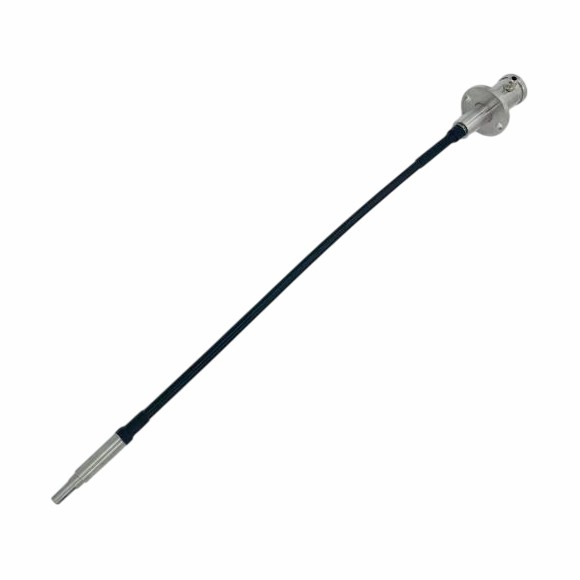
Let's start by understanding what a temperature monitoring cable is. In simple terms, it's a cable equipped with sensors that can measure temperature at different points along its length. These cables are designed to be flexible, durable, and most importantly, accurate. But achieving high - level accuracy isn't always a walk in the park.
Factors Affecting Accuracy
One of the main factors that can influence the accuracy of a temperature monitoring cable is the quality of the sensors used. High - end sensors are calibrated to a very precise standard. They're designed to detect even the slightest changes in temperature. For example, in a scientific research lab where they're studying the effects of temperature on a chemical reaction, a small error in temperature measurement could lead to inaccurate results.
The environment in which the cable is installed also plays a huge role. If the cable is exposed to extreme conditions, like high humidity, strong electromagnetic fields, or very high or low temperatures, it can affect the performance of the sensors. For instance, in a barn, where the humidity can be quite high, the sensors in the Barn Temperature Sensing Cable need to be able to withstand the moisture without giving false readings.
Another factor is the length of the cable. As the length increases, there can be signal loss, which might lead to inaccuracies in temperature measurement. However, modern temperature monitoring cables are designed to minimize this issue. For example, our Ultra - Tensile Temperature Measurement Cable is engineered to maintain signal integrity over long distances, ensuring accurate temperature readings throughout its length.

Calibration: The Key to Accuracy
Calibration is like the secret sauce for ensuring the accuracy of a temperature monitoring cable. It's a process where the cable is compared against a known standard to adjust its readings. Regular calibration is essential, especially if the cable is used in critical applications.
Let's say you're using a temperature monitoring cable in a food storage facility. Accurate temperature measurement is vital to ensure the quality and safety of the food. If the cable isn't calibrated properly, it might give incorrect readings, which could lead to spoilage of the food.
Most of our cables come with a calibration certificate, which shows that they've been tested and adjusted to meet a certain level of accuracy. But it's still a good idea to have the cable recalibrated periodically, depending on how often it's used and the environment it's in.
Testing and Validation
Before we send out any of our temperature monitoring cables, we put them through a series of rigorous tests. We test them in different temperature ranges, humidity levels, and electromagnetic environments to make sure they perform as expected.
We also use advanced testing equipment to validate the accuracy of the cables. For example, we might use a Portable Temperature Instrument to compare the readings of the cable with a highly accurate reference device. This helps us identify any potential issues and make the necessary adjustments.
Real - World Applications and Accuracy Requirements
The accuracy requirements vary depending on the application. In some industrial processes, like metal smelting, a small error in temperature measurement can have a big impact on the quality of the final product. In these cases, the temperature monitoring cable needs to be extremely accurate, with an error margin of just a few degrees.
On the other hand, in a home garden where you're using a temperature monitoring cable to keep an eye on the soil temperature, the accuracy requirements might not be as strict. A slightly larger error margin might be acceptable as long as you get a general idea of the temperature.
How We Ensure High Accuracy
At our company, we're committed to providing temperature monitoring cables that are as accurate as possible. We use the latest technology in sensor design and manufacturing to ensure high - quality sensors are used in our cables.
We also have a team of experts who are constantly working on improving the design and performance of our cables. They're always looking for ways to reduce the impact of environmental factors and signal loss on accuracy.
In addition, we offer excellent customer support. If you have any questions about the accuracy of our cables or need help with calibration, our team is always ready to assist you.
Conclusion
So, how accurate is a temperature monitoring cable? Well, it depends on a variety of factors, including the quality of the sensors, the environment, calibration, and the application. But with proper design, testing, and calibration, a high - quality temperature monitoring cable can provide very accurate temperature measurements.
If you're in the market for a temperature monitoring cable and want to ensure high accuracy for your specific application, we'd love to hear from you. Whether you're in the industrial, agricultural, or any other sector, we have the right cable for you. Reach out to us to start a conversation about your temperature monitoring needs, and let's find the perfect solution together.
References
- "Temperature Sensor Handbook", by John Doe
- "Industrial Temperature Measurement Techniques", published by ABC Publishing