

China's latest grain storage policy highlights a shift toward integrated grain condition monitoring, automated storage operations, and intelligent early-warning systems, creating new opportunities for temperature and humidity monitoring technologies.
On July 2, 2026, China's National Food and Strategic Reserves Administration (NFSRA) published the Guiding Opinions on Building Safe, Smart, Green and Integrity-Based Grain Depots. The document, dated June 30, 2026, outlines a comprehensive approach to improving grain storage safety, operational efficiency, and sustainable management.
One of the policy's important technical directions is the transition from conventional grain temperature detection toward intelligent, multi-parameter grain condition monitoring. It also encourages automated ventilation, temperature control, controlled-atmosphere storage, and the application of technologies such as the Internet of Things (IoT), artificial intelligence (AI), and intelligent early-warning systems.
For grain storage operators and monitoring equipment manufacturers, these developments highlight the growing importance of reliable sensor networks, integrated data acquisition, and coordinated storage management.
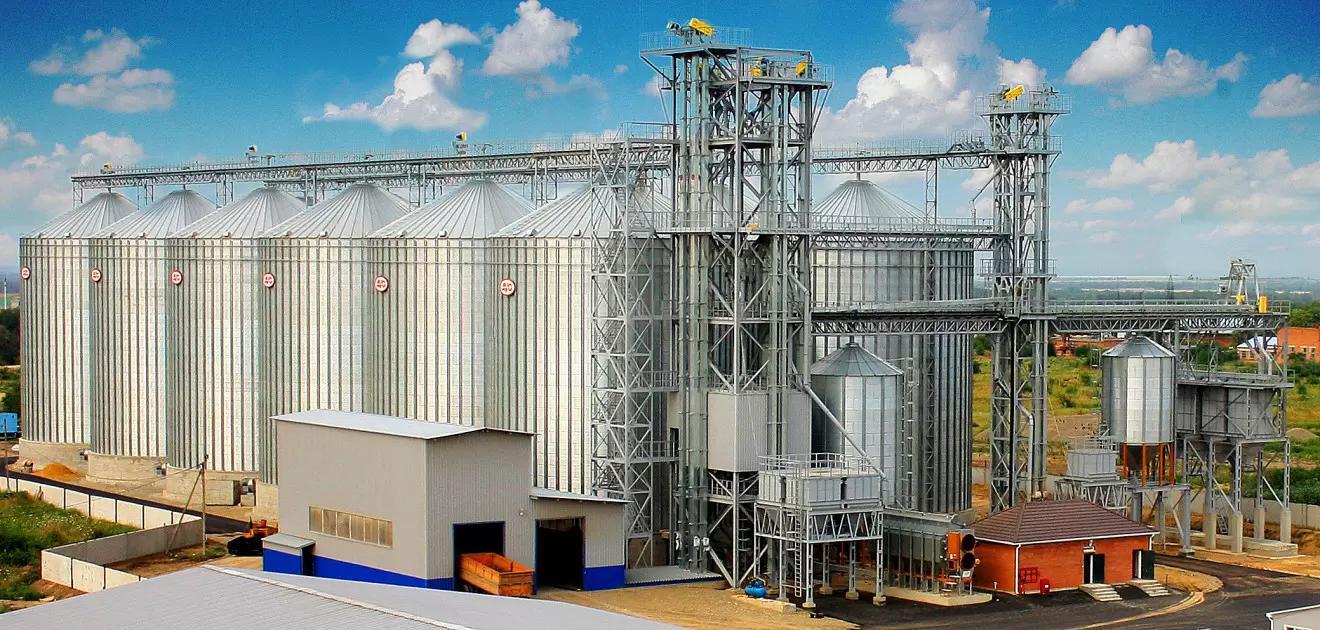
1. From Single-Parameter Temperature Detection to Multi-Parameter Monitoring
Temperature monitoring has traditionally been one of the most widely used methods for evaluating grain storage conditions.
Multi-point temperature cables installed inside grain silos allow operators to measure temperatures at different depths and detect abnormal temperature increases.
However, grain temperature alone cannot provide a complete picture of storage conditions.
The new policy explicitly calls for strengthening grain condition monitoring and early-warning capabilities, with a gradual shift toward intelligent multi-parameter monitoring and control.
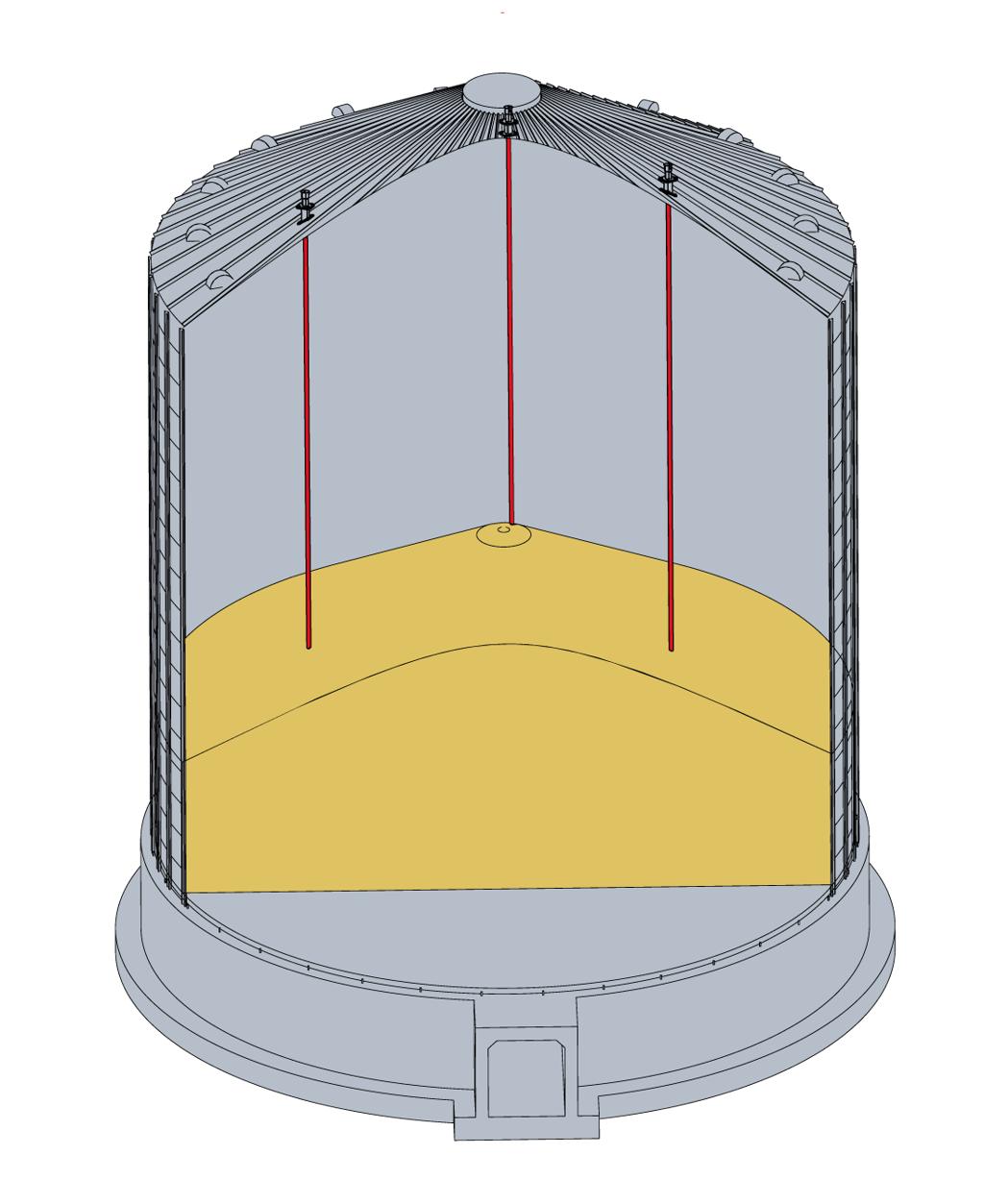
Illustration: Multi-point sensor cables measure conditions at different depths within a grain silo
A comprehensive grain monitoring system may combine several types of measurements, including grain temperature, environmental temperature and relative humidity, grain moisture content, insect activity, mold-related indicators, and gas concentrations where appropriate.
Each parameter serves a different purpose. For example, relative humidity describes the moisture condition of the surrounding air, while grain moisture content refers to the water contained within the grain itself.
Combining these measurements can help operators identify unfavorable storage conditions and make better-informed management decisions.
2. Automated Ventilation and Temperature Control
Another important direction outlined in the policy is the automation of mechanical ventilation, temperature control, and controlled-atmosphere storage operations.
In conventional grain storage facilities, operators may manually inspect monitoring data before deciding whether to activate ventilation equipment.
An integrated monitoring and control system can support this process by collecting sensor measurements and evaluating predefined operating conditions.
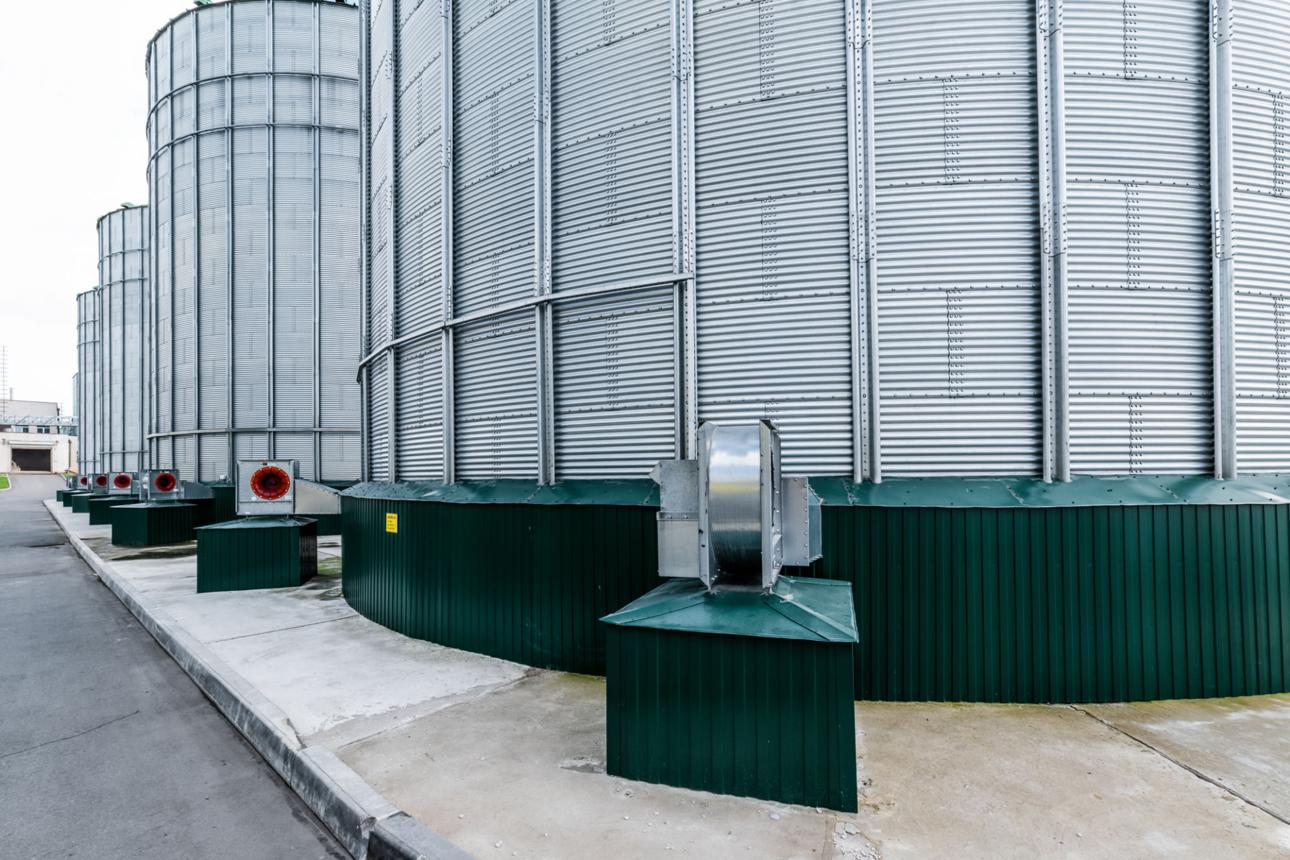
Grain silo ventilation systems can be integrated with suitable monitoring and control equipment.
For example, a system may collect grain temperature, outdoor temperature, and relative humidity data to help determine suitable ventilation conditions.
When connected to compatible controllers, the monitoring system can support automated fan operation according to the facility's requirements.
However, ventilation decisions must consider more than temperature alone. Grain moisture, outdoor air conditions, condensation risks, and operational safety are also important.
Reliable automation therefore depends on accurate measurements, appropriate control strategies, and properly designed safety mechanisms.
3. IoT Connectivity and Intelligent Early Warning
The policy encourages the use of big data, IoT, artificial intelligence, and integrated intelligent equipment in grain depot management.
It also supports the development of regional smart grain depot operation centers where conditions permit.
These technologies can connect individual sensors, data acquisition devices, and monitoring platforms into a coordinated system.
Typical Grain Monitoring Architecture

Monitoring Sensors
GTemperature cables · Temperature & humidity sensors
Data Acquisition Unit
RTU · Data collection · Modbus RTU
Communication Network
RS-485 · Ethernet · 4G gateway
Monitoring Platform
Data visualization · Historical records · Alarms
Illustrative architecture. The policy does not mandate a particular communication protocol or network technology.
A typical monitoring system begins with sensors installed inside the grain mass or storage facility.
A data acquisition unit receives the measurements and transmits them through a suitable communication network to local monitoring software or a remote platform.
Operators can then review measurements, analyze historical trends, and receive notifications when predefined abnormal conditions are detected.
For facilities operating multiple grain warehouses, connected monitoring systems can also support centralized data management.
4. Green Grain Storage and Energy Efficiency
The policy places additional emphasis on improving the energy efficiency of grain storage operations.
It encourages energy-saving upgrades to ventilation, temperature control, and controlled-atmosphere equipment. It also promotes appropriate green storage technologies and measures to reduce moisture and dry-matter losses.
Accurate monitoring provides useful information for achieving these objectives.
For example, continuous temperature measurements can help operators evaluate changes within a grain mass and assess the effectiveness of cooling operations.
Environmental monitoring can also provide information needed to select suitable ventilation periods.
When monitoring equipment is integrated with properly designed control systems, facilities may be able to reduce unnecessary equipment operation while maintaining appropriate storage conditions.
However, energy savings depend on the actual equipment, operating strategy, climate, and storage requirements. Monitoring equipment alone does not guarantee lower energy consumption.
5. What Does This Mean for Grain Monitoring Equipment?
The policy highlights the importance of integrating sensing, data acquisition, communication, and monitoring software into practical grain storage management solutions.
For manufacturers and system integrators, this creates a technical development direction extending beyond individual temperature sensors.
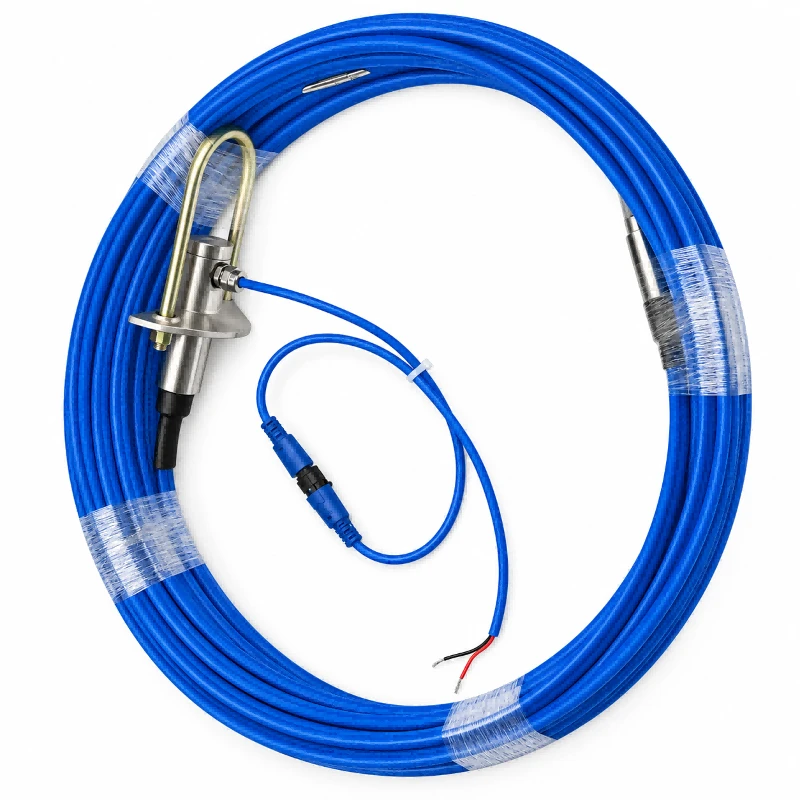
Multi-Point Temperature and Humidity Cables

ZS-RTU-1600P
Temperature Collection Box
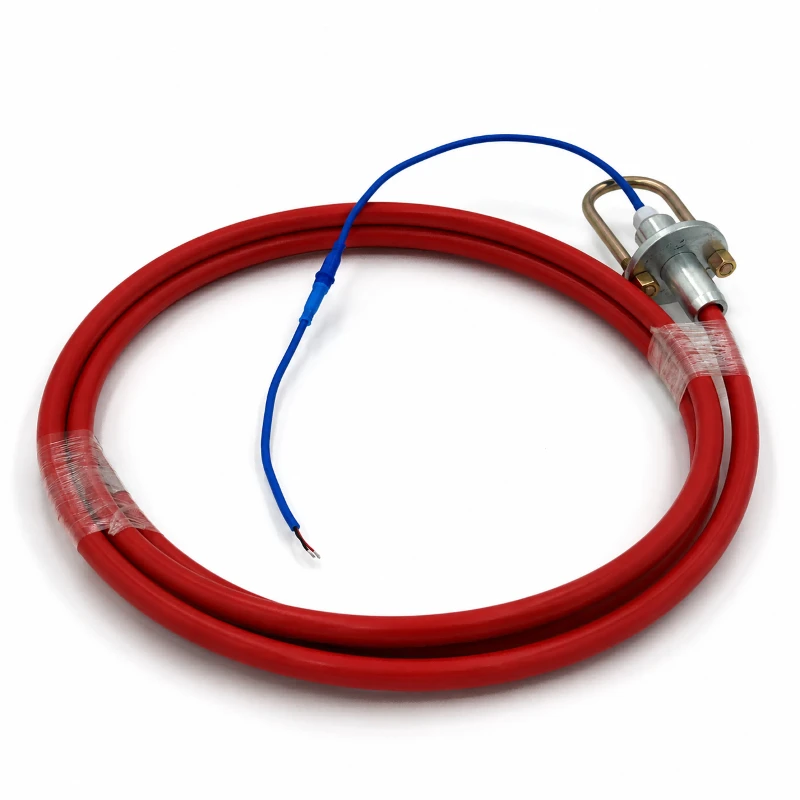
Armored replaceable core temperature measurement cable
Distributed sensing cables provide measurements at different depths within stored grain.
These devices can form part of a broader multi-parameter monitoring system.
Multi-channel RTUs collect measurements from distributed sensors and provide communication interfaces for monitoring systems.
The ZS-RTU-800P supports up to 800 sensor points and Modbus RTU/TCP communication.
Data acquisition equipment can be connected to compatible gateways and monitoring platforms.
Depending on project requirements, these systems may support remote data access, historical records, and abnormal-condition alarms.
Product information is based on the manufacturer's published specifications and system descriptions.
6. Does the Policy Require Immediate Equipment Replacement?
The policy does not establish an immediate nationwide requirement for all grain depots to replace existing temperature monitoring equipment.
Instead, it emphasizes implementation according to local conditions, practical requirements, and the capabilities of individual facilities.
For an existing grain depot, modernization may involve improving data acquisition, adding suitable monitoring parameters, or integrating existing equipment into a centralized management platform.
Newly constructed facilities may incorporate more comprehensive monitoring and automation systems from the beginning.
The appropriate approach depends on the condition of existing infrastructure, storage requirements, available resources, and applicable technical standards.
Conclusion: Towards More Connected and Data-Driven Grain Storage
China's 2026 smart grain depot policy outlines a direction for the modernization of grain storage management.
Temperature monitoring remains an essential part of grain condition assessment, while additional sensing parameters, connected acquisition systems, and intelligent early-warning capabilities can provide a more comprehensive understanding of storage conditions.
For equipment manufacturers and grain storage operators, the focus is increasingly shifting toward reliable measurements, flexible communication, practical system integration, and coordinated monitoring and control.
The effectiveness of these technologies will ultimately depend on how well they address the requirements of individual grain storage facilities.