


What the New Warehouse Form Could Mean for Grain Monitoring, Temperature Cables and Intelligent Aeration
Published: September 2026
Location: Changchun, Jilin Province, China
Project owner: China Grain Reserves Group Ltd. (Sinograin)
Project type: 10,000-tonne-class inflatable grain warehouse
On September 23, 2026, China's State-owned Assets Supervision and Administration Commission of the State Council reported that Sinograin had completed membrane inflation for China's first 10,000-tonne-class inflatable grain warehouse in Changchun, Jilin Province.
The project comprises four planned warehouses. Each warehouse has a diameter of 30 metres and a height of 29 metres. Located in one of China's major grain-producing regions, the project has been designed with particular attention to thermal insulation, airtightness and moisture protection under the severe winter conditions of Northeast China.
The development represents more than a new warehouse construction method. It also raises important technical questions about grain-temperature monitoring, warehouse environmental sensing, intelligent aeration, temperature-cable suspension, mechanical strength and data integration.
Official announcement and project photographs:
Read the SASAC announcement published on September 23, 2026
Project at a Glance
| Item | Publicly reported information | Technical significance |
|---|---|---|
| Project milestone | Membrane inflation completed on September 23, 2026 | Establishes the main warehouse enclosure and prepares the project for subsequent equipment installation |
| Location | Changchun, Jilin Province | Cold winters and large seasonal temperature differences increase insulation and condensation-control requirements |
| Number of warehouses | Four planned units | Requires coordinated monitoring and consistent data management across multiple warehouses |
| Storage capacity | 10,000-tonne class per warehouse | A large grain mass requires multi-point and multi-zone monitoring |
| Warehouse diameter | 30 m | Temperature cables must be distributed radially rather than concentrated only in the centre |
| Warehouse height | 29 m | Cable length, suspension loads, installation access and maintenance become important engineering factors |
| Environmental priorities | Thermal insulation, airtightness and moisture protection | Monitoring should include grain, headspace, enclosure and outdoor conditions |
| Development direction | Green and smart grain storage | Creates demand for intelligent sensing, automatic ventilation and digital management |
Table 1. Project information is based on the official announcement. The technical-significance column represents independent industry analysis.
A New Type of Large Grain-Storage Structure
An inflatable grain warehouse is formed through a membrane-based construction process. During inflation, air pressure supports and shapes the membrane so that the warehouse enclosure can be established.
Completing the inflation process is therefore a major construction milestone. It indicates that the main external form of the warehouse has taken shape and that subsequent structural, mechanical, electrical and monitoring systems can be progressively installed.
Compared with a conventional reinforced-concrete warehouse or steel silo, an inflatable warehouse may offer a more integrated building envelope and a different construction sequence. It may also create new requirements for:
- Equipment mounting points
- Cable and pipe penetrations
- Internal support structures
- Sensor suspension
- Airtight sealing
- Maintenance access
- Low-temperature material performance
- Connection between civil construction and monitoring equipment
The 30-metre diameter means that conditions in the centre of the grain mass may differ considerably from those close to the enclosure. The 29-metre building height also means that sensing cables, electrical wiring and suspension systems must be considered early in the project design.
Visual Reference: Earlier Inflatable Grain Warehouses
View photographs of China's earlier 9,000-tonne-class inflatable grain warehouses
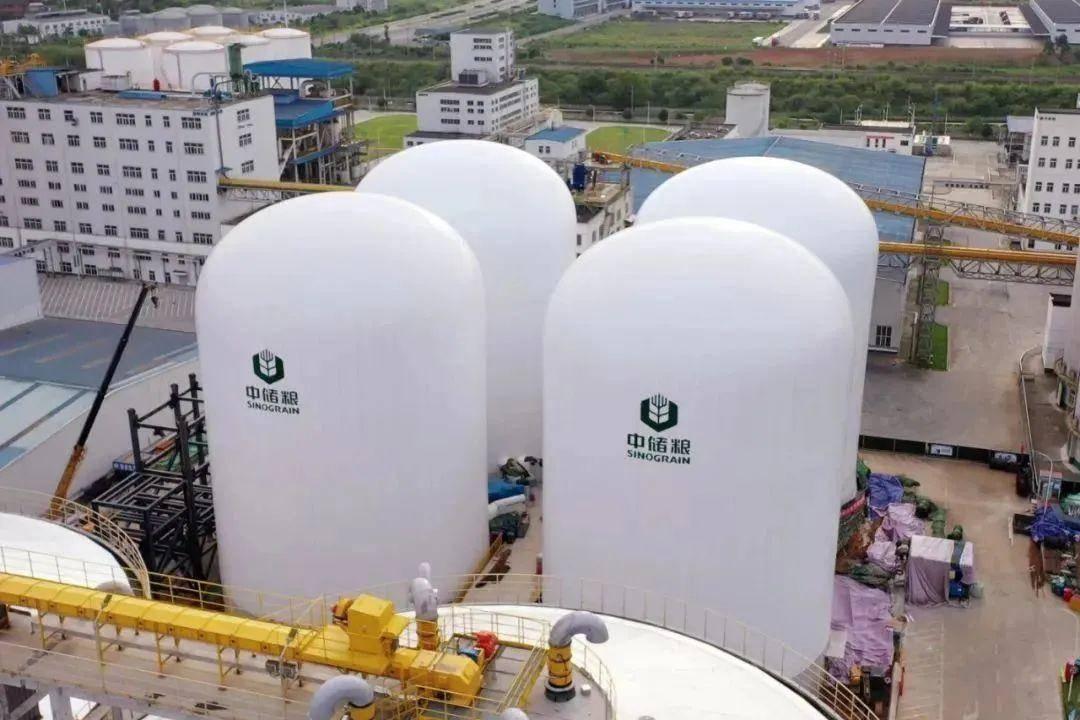
Image note: The photographs in the linked report show earlier inflatable grain warehouses and are provided only to illustrate the general warehouse form. They must not be described as photographs of the Changchun project.
Why Changchun's Cold Climate Matters
Changchun experiences long, cold winters, large seasonal temperature differences and rapid changes during the transition between winter and spring.
For grain storage, this climate creates several technical challenges.
1. Heat transfer through the warehouse enclosure
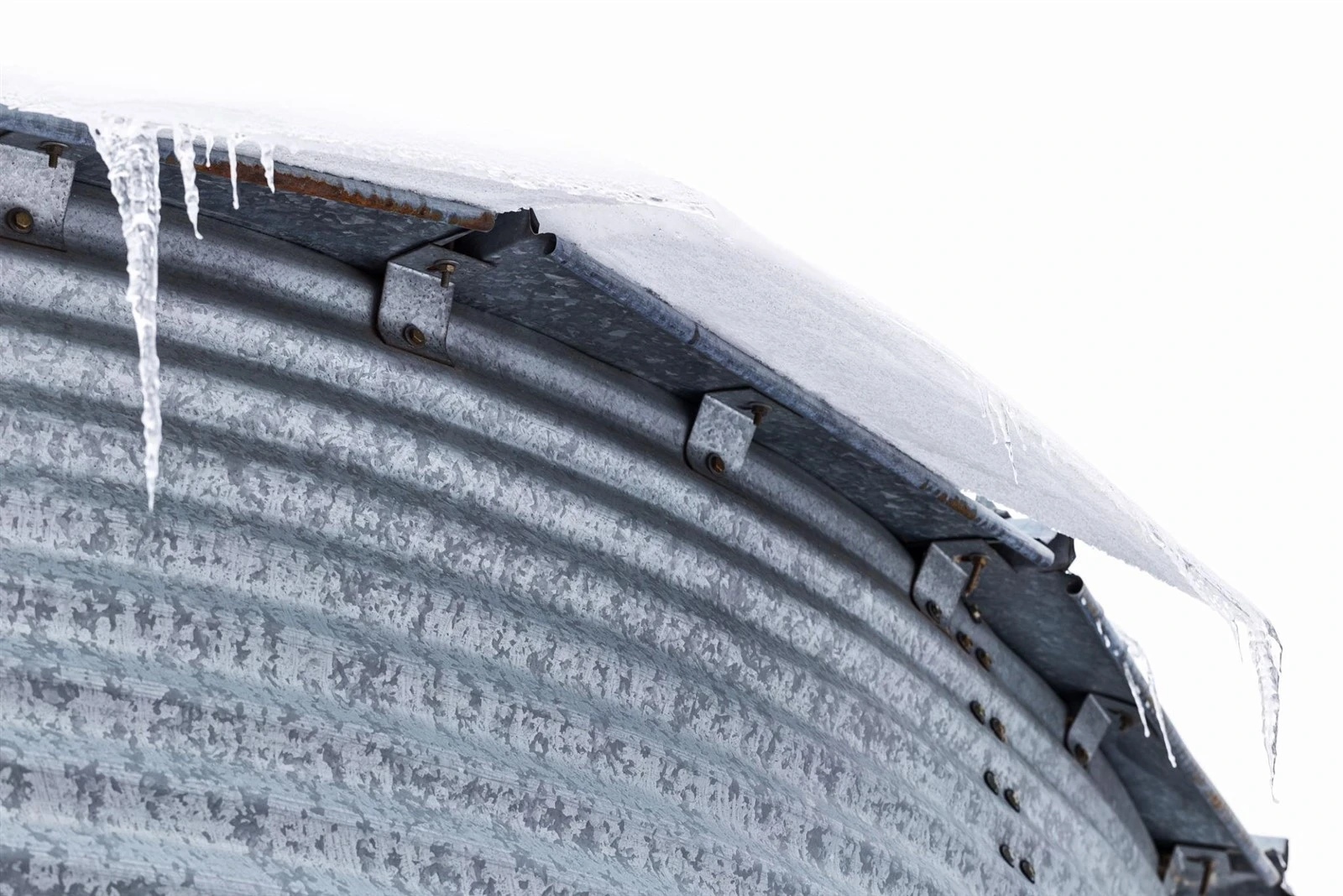
When outdoor temperatures fall sharply, the inner surface of the warehouse enclosure may become much colder than the grain mass and internal air.
A well-insulated enclosure can reduce the speed of this heat transfer. However, insulation cannot completely eliminate temperature differences between the warehouse centre, perimeter and headspace.
The monitoring system should therefore distinguish among:
- Grain temperature in the central area
- Grain temperature near the perimeter
- Headspace air temperature
- Inner-surface temperature
- Outdoor air temperature
- Temperature around doors and structural junctions
2. Condensation risk
Condensation can occur when warm, moisture-bearing air comes into contact with a sufficiently cold surface.
Potential risk areas include:
- The inner roof surface
- Membrane junctions
- Access doors
- Cable penetrations
- Ventilation openings
- Structural connections
- Grain surfaces close to the warehouse wall
Condensed water may drip onto the grain surface or migrate into localized areas of the grain mass. This can create wet grain, mould growth, caking and deterioration even if the average grain moisture remains acceptable.
For this reason, warehouse monitoring should include dew-point analysis rather than relying only on relative-humidity values.
3. Seasonal temperature reversal
During winter, grain near the perimeter may cool faster than grain in the centre. During spring, the outdoor environment may warm quickly while the interior grain remains cold.
These conditions can create temperature gradients and internal air movement. Monitoring only one position could therefore give an incomplete picture of the actual storage condition.
4. Airtightness and controlled operation
Good airtightness can:
- Reduce uncontrolled air infiltration
- Improve moisture management
- Increase the effectiveness of fumigation
- Support controlled-atmosphere storage
- Make designed ventilation more predictable
- Reduce unnecessary energy loss
However, airtightness must remain compatible with pressure control, ventilation, gas monitoring and personnel safety.
Every cable, sensor, duct or instrument that passes through the warehouse enclosure must use an appropriate sealed interface.
Recommended Multi-Parameter Monitoring Framework
The new warehouse form could accelerate the transition from basic grain-temperature measurement to coordinated, multi-parameter grain-condition monitoring.
| Monitoring layer | Recommended measurements | Main purpose | Potential location |
|---|---|---|---|
| Grain mass | Multi-point grain temperature | Detect abnormal warming, hotspots and spatial differences | Multiple vertical cable arrays |
| Grain moisture | Grain-moisture measurement where technically appropriate | Support quality assessment and ventilation decisions | Selected representative locations |
| Headspace | Temperature and relative humidity | Detect conditions associated with condensation | Above the grain surface |
| Warehouse envelope | Inner-surface temperature | Identify cold surfaces and thermal bridges | Roof, wall, access points and structural transitions |
| Gas environment | CO₂ and O₂; process-specific gases where required | Detect biological activity and support controlled-atmosphere operations | Engineering-selected sampling positions |
| Outdoor environment | Temperature and relative humidity | Determine whether outdoor air is suitable for ventilation | Representative outdoor weather station |
| Aeration equipment | Fan current, pressure, damper position and operating status | Confirm that ventilation equipment is operating correctly | Fans, ducts and control cabinets |
| Communication system | Device status, communication errors and data quality | Identify sensor and network failures | Acquisition units and management platform |
Table 2. Illustrative monitoring framework. Final sensor selection and positioning require project-specific engineering.
Grain-Temperature Monitoring
Grain temperature remains one of the most important indicators of storage stability.
Abnormal temperature increases may be associated with:
Insect activity
Fungal activity
High-moisture grain
Localized biological respiration
Insufficient ventilation
Uneven cooling
External heat penetration
Sensor or cable failure
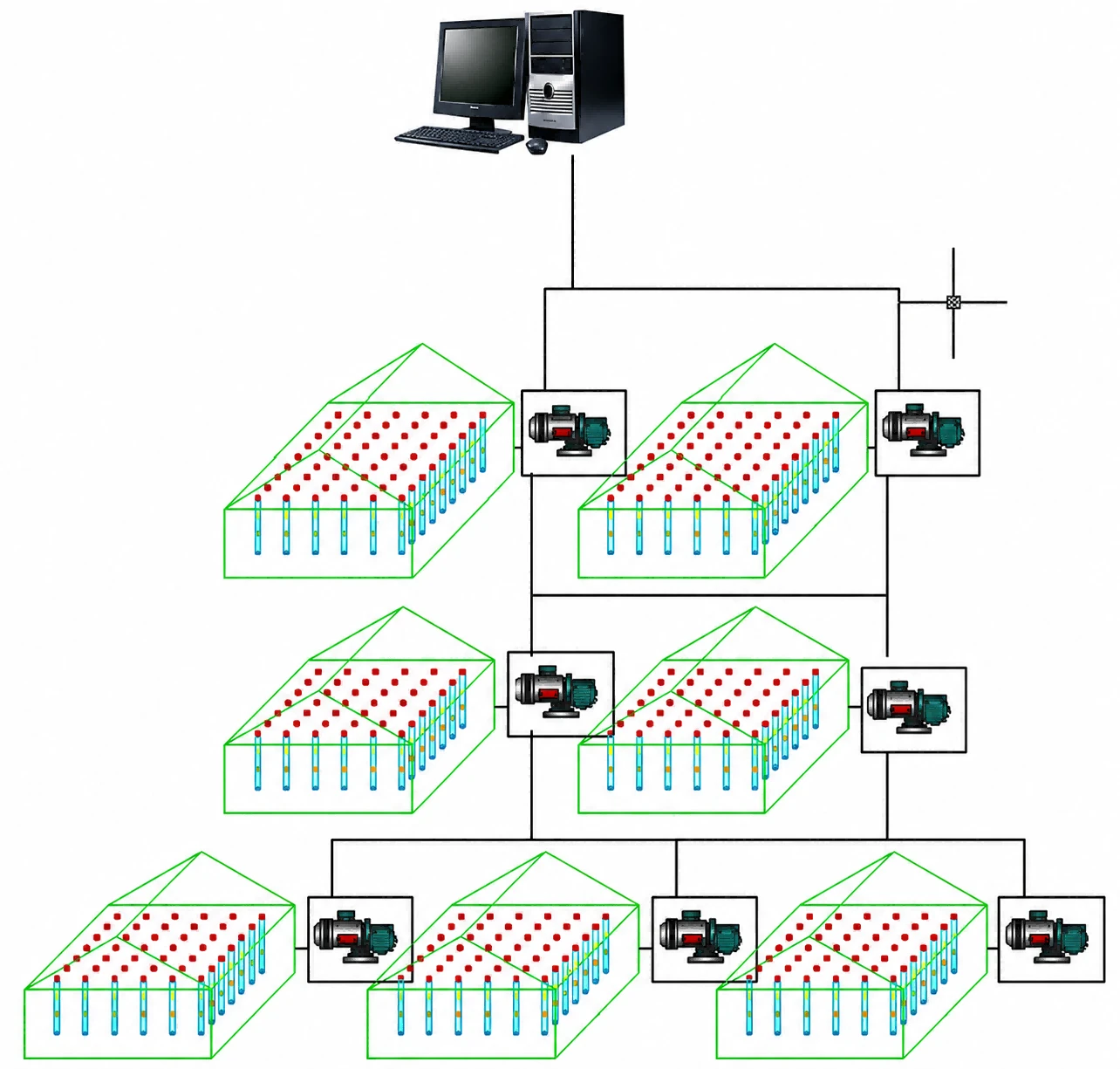
In a large cylindrical warehouse, the monitoring system should provide both vertical and radial coverage.
Vertical coverage

Sensors should be positioned at multiple elevations so that the system can detect temperature changes at different grain depths.
The appropriate spacing depends on:
- Final grain depthFinal grain depth
- Stored grain type
- Required monitoring accuracy
- Ventilation arrangement
Warehouse Temperature and Humidity Monitoring
Grain temperature alone cannot fully explain the condition of the storage environment.
Headspace temperature and humidity provide essential context, particularly when assessing condensation risk.
Useful monitoring positions may include:
- The centre of the headspace
- Areas close to the roof
- Locations near ventilation outlets
- Areas close to access doors
- Selected enclosure junctions
- Areas where condensation has previously occurred
Relative humidity should be interpreted together with temperature. The system should preferably calculate or estimate dew point automatically.
A gradual increase in headspace humidity combined with a falling roof-surface temperature may provide an early warning before visible condensation occurs.
Gas Monitoring and Early Warning
Depending on the grain type, storage duration and operating method, gas monitoring may include carbon dioxide, oxygen and fumigation-related gases.
1.Carbon dioxide
Grain, insects and microorganisms release carbon dioxide through respiration. A rising CO₂ trend may provide supplementary evidence of increasing biological activity.
However, carbon dioxide should not be used as the only indicator of grain condition. It should be analysed together with temperature, humidity and ventilation data.
2.Oxygen
Oxygen monitoring may be required when controlled-atmosphere or low-oxygen storage methods are used. It may also be necessary for personnel-safety procedures.
3.Fumigation gases
Where fumigation is used, gas-sampling design should consider:
- Gas distribution
- Sampling height
- Sampling frequency
- Sensor range
- Calibration
- Leakage detection
- Safe-entry requirements
Gas behaviour may differ at different heights, so a single sampling point may not represent the complete warehouse.
Temperature-Cable Suspension Requirements
The method used to suspend temperature cables is one of the most important technical questions for the new warehouse form.
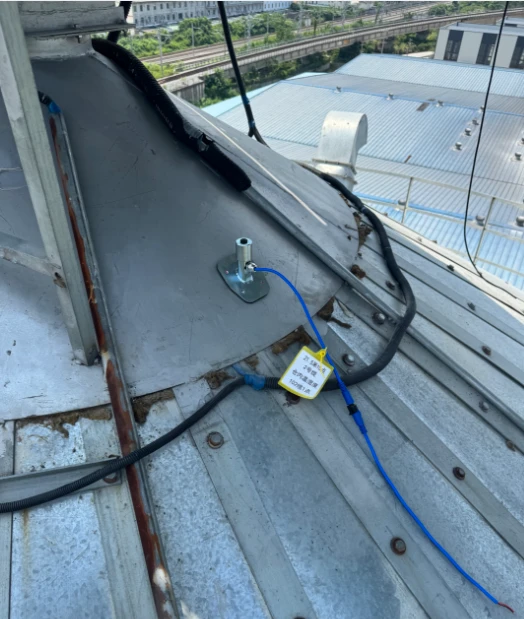
A membrane surface should not automatically be treated as a load-bearing point for temperature cables. Unless specifically engineered and certified, cables should not be suspended directly from the membrane.
Possible solutions may include:
- Independent internal support frames
- Dedicated structural beams
- Approved roof-support members
- Engineered cable-suspension assemblies
- Load-distribution structures
- Pre-designed anchor points
The suspension design must consider both static and dynamic forces.
Static forces include the weight of the cable and its accessories. Dynamic forces may develop during grain filling, settlement and unloading.
Cable Layout and Sensor Distribution
A practical monitoring layout for a 30-metre-diameter warehouse would normally use multiple vertical cables rather than one central cable.
The final layout should coordinate with:
- Filling equipment
- Grain-flow direction
- Discharge openings
- Sweep augers
- Aeration ducts
- Internal structural members
- Maintenance routes
- Cable-replacement requirements
| Design question | Potential risk | Recommended response |
|---|---|---|
| Can the membrane support the cable? | Concentrated loading or membrane damage | Use a certified structural suspension point |
| Is one central cable sufficient? | Large unmonitored grain areas | Use central, intermediate and perimeter cable zones |
| Are sensor heights appropriate? | Undetected hotspots between sensing layers | Match sensor elevation to grain depth and risk profile |
| Is the cable clear of filling equipment? | Impact or abrasion damage | Coordinate cable position with filling trajectories |
| Is the cable clear of reclaim equipment? | Cable entanglement or breakage | Maintain mechanical clearance from augers and discharge paths |
| Can the cable be replaced? | High maintenance cost and long downtime | Use serviceable suspension and replaceable designs where practical |
| Are penetrations sealed? | Air and moisture leakage | Use airtight, water-resistant feed-through assemblies |
Table 3. Temperature-cable installation questions for engineering review.
Tensile Strength and Mechanical Protection
Long temperature cables installed in deep grain are exposed to significant mechanical forces.
During filling, grain movement can pull the cable sideways. During settlement, grain pressure can create sustained loading. During unloading, changing grain-flow patterns may impose additional drag and bending forces.
Cable selection should therefore consider:
- Rated tensile capacity
- Internal reinforcement structure
- Cable diameter
- Top termination
- Strain-relief design
- Abrasion resistance
- Bending performance
- Low-temperature flexibility
- Grain-pressure resistance
- Safety factor
- Expected service life
The cable, anchor, connector and transition assembly should be evaluated as one mechanical system.
A cable with a high tensile rating is not sufficient if the suspension point, connector or termination is weaker.
Where maintenance access is difficult, replaceable sensor cores or serviceable cable assemblies may reduce long-term operating costs.
Installation records should document:
- Warehouse number
- Cable number
- Cable coordinates
- Suspension point
- Total cable length
- Sensor elevations
- Mechanical rating
- Commissioning results
- Calibration or inspection record
Data Acquisition and System Integration
The monitoring system should be incorporated into the warehouse engineering design rather than added after construction.
A typical system may include:
Grain-temperature cables
Warehouse temperature and humidity sensors
Outdoor weather sensors
CO₂ and O₂ instruments
Fan and damper controls
Pressure or airflow sensors
Local acquisition units
Industrial gateways
Management software
Local or cloud data storage
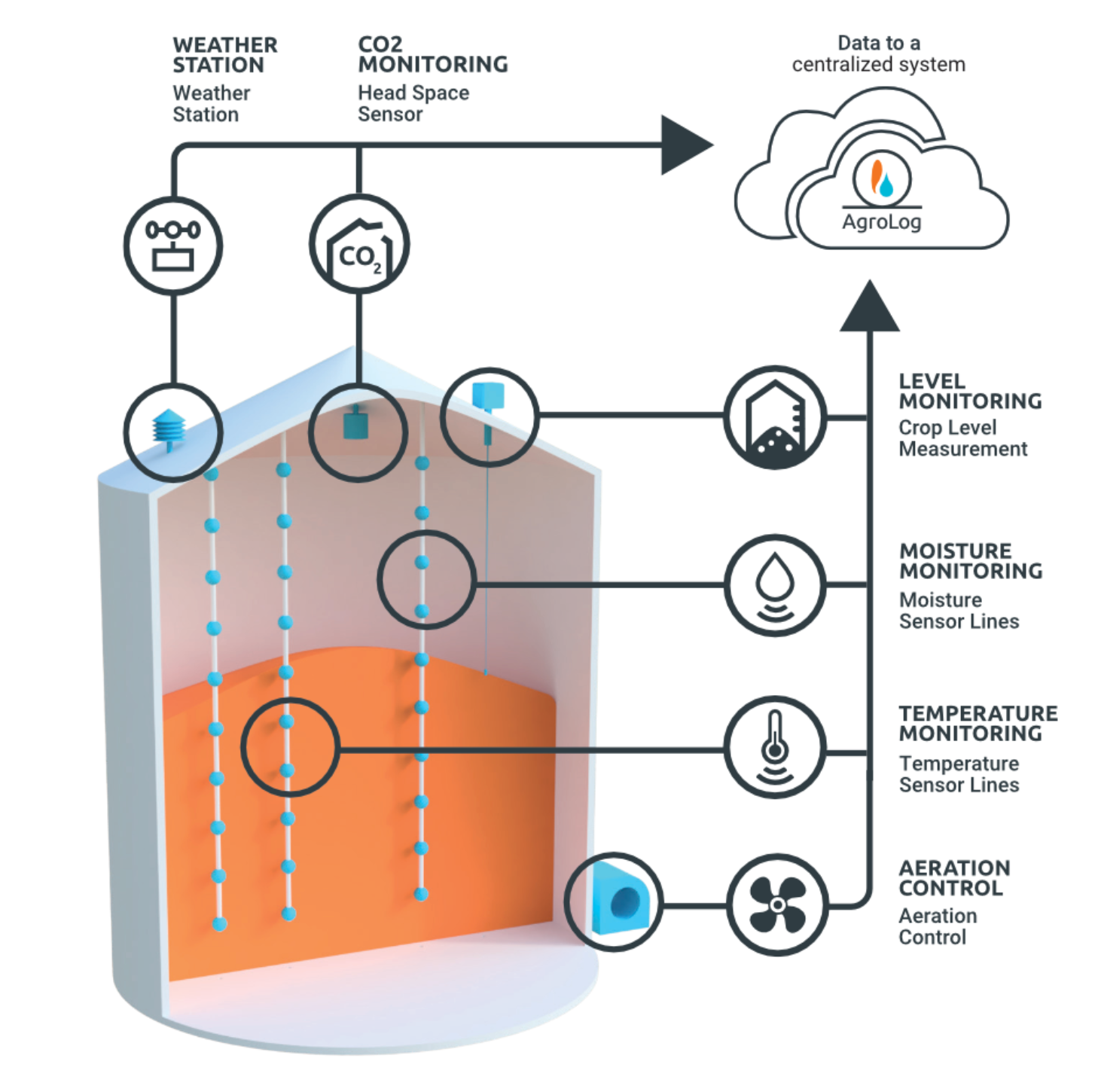
Figure 2. Third-party example showing the integration of grain-temperature cables, moisture monitoring, headspace sensing, CO₂, weather data, aeration control and management software. Source: AgroLog TMS6000. This is an industry reference and does not represent equipment installed in the Changchun project.
The referenced system illustrates how temperature, moisture, CO₂, headspace, ambient-weather and fan-control data can be combined within one platform.
Data Quality Is as Important as Connectivity
| Data field | Example | Purpose |
|---|---|---|
| Warehouse ID | CHC-A01 | Identifies the storage unit |
| Cable ID | TC-07 | Identifies the temperature cable |
| Sensor ID | P12 | Identifies the point on the cable |
| Physical position | Radius, angle and elevation | Links the reading to its actual location |
| Measurement | 18.6 °C | Provides the monitored value |
| Data status | Valid | Indicates whether the value can be trusted |
| Timestamp | 2026-09-23 14:30 | Supports trend and event analysis |
| Alarm level | Normal, warning or critical | Supports operational response |
| Maintenance status | Active or under service | Prevents maintenance activity from being interpreted as a fault |
Table 4. Example monitoring-point data model.
Suggested Alarm Strategy
The system should not rely only on one fixed high-temperature alarm.
A more complete strategy may include:
| Alarm type | Example purpose |
|---|---|
| Absolute high temperature | Detect a point that exceeds the permitted limit |
| Rapid temperature rise | Detect abnormal heating before the high limit is reached |
| Zone temperature difference | Detect an abnormal difference between neighbouring areas |
| Headspace dew-point warning | Identify increasing condensation risk |
| High CO₂ trend | Provide supplementary evidence of biological activity |
| Sensor failure | Identify open circuit, short circuit or invalid reading |
| Communication timeout | Detect missing data from acquisition equipment |
| Fan failure | Identify a mismatch between command and motor status |
| Poor aeration response | Detect ventilation that fails to produce the expected temperature change |
Alarm thresholds should be adapted to grain type, storage stage, local climate and operating procedures.
Conclusion
The completion of membrane inflation for Sinograin's first 10,000-tonne-class inflatable grain warehouse represents an important step in the development of new grain-storage infrastructure in China.
Its location in Changchun makes thermal insulation, airtightness and moisture protection essential engineering considerations. Its size creates demanding requirements for representative temperature monitoring, reliable cable suspension, environmental sensing and intelligent ventilation.
The long-term significance of the project will depend not only on the warehouse enclosure but also on the monitoring and control systems installed inside it.
Grain-temperature cables, warehouse temperature and humidity sensors, gas monitoring, intelligent aeration and data platforms should be treated as parts of one coordinated system.
When these systems are considered from the earliest engineering stage, the new warehouse form could provide a strong foundation for safer, greener and more intelligent grain storage in cold-climate regions.