

Hey there! As a supplier of Coal Storage Bin Temperature Cables, I'm super stoked to share with you how these nifty cables work. It's not just a piece of tech; it's a game - changer for anyone dealing with coal storage.
First off, let's talk about why we even need to monitor the temperature in coal storage bins. Coal, as you probably know, is a combustible material. When stored in large quantities, it can self - heat due to oxidation. If the temperature rises too high, it can lead to spontaneous combustion, which is a huge safety hazard and can cause significant financial losses. That's where our Coal Storage Bin Temperature Cables come in.
So, how do these cables operate? Well, at the heart of it, they're all about accurate temperature sensing. The cables are equipped with multiple temperature sensors placed at strategic intervals along their length. These sensors are designed to be highly sensitive and can detect even the slightest changes in temperature.
The way these sensors work is based on the principle of thermoelectricity. Most of the sensors used in our cables are thermocouples. A thermocouple consists of two different metals joined together at one end. When there's a temperature difference between the junction (the joined end) and the other end of the metals, it generates a small electric voltage. This voltage is directly proportional to the temperature difference. By measuring this voltage, we can accurately determine the temperature at the sensor's location.
Now, you might be wondering how the data from these sensors gets transmitted. Our Coal Storage Bin Temperature Cables are connected to a monitoring system. The cables are usually laid out in a grid pattern inside the coal storage bin, covering as much area as possible. The sensors send the temperature data to the monitoring system via the cable itself. The cable acts as a communication channel, carrying the electrical signals representing the temperature readings from the sensors to the monitoring unit.
The monitoring system is the brains behind the operation. It's a sophisticated piece of equipment that can collect, analyze, and display the temperature data. It can show real - time temperature readings for each sensor, allowing operators to keep a close eye on the temperature distribution inside the bin. The system can also be programmed to set temperature thresholds. If the temperature at any sensor exceeds the set threshold, it can trigger an alarm. This could be an audible alarm or a notification sent to the operator's phone or computer, alerting them to a potential problem.
One of the great things about our cables is their durability. Coal storage environments can be pretty harsh, with dust, moisture, and mechanical stress. Our cables are specially designed to withstand these conditions. They're encased in a tough outer sheath that protects the internal sensors and wires from damage. This ensures that the cables can continue to function reliably over a long period, even in challenging environments.

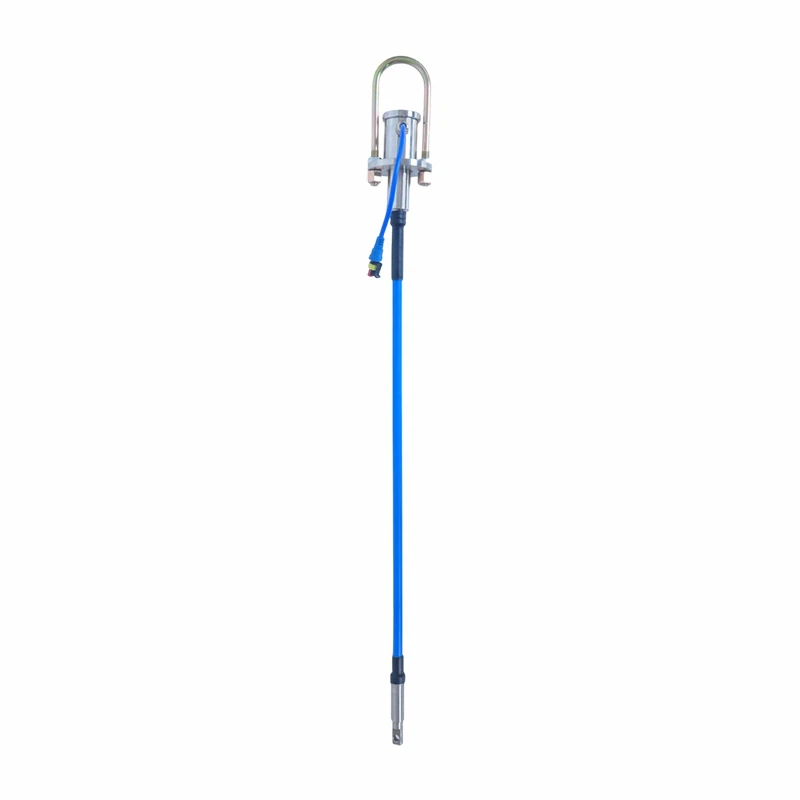
Another advantage of our Coal Storage Bin Temperature Cables is their flexibility. They can be easily installed in different types of coal storage bins, regardless of their size or shape. Whether it's a small - scale storage facility or a large industrial bin, our cables can be customized to fit the specific requirements of the installation.
Now, let's compare our Coal Storage Bin Temperature Cables with some related products. For example, there's the Grain Temperature Cable. While both are used for temperature monitoring, the requirements for coal and grain storage are quite different. Grain storage usually requires less rugged cables as the environment is less harsh compared to coal storage. Also, the temperature ranges and the risks associated with grain storage, such as mold growth, are different from those of coal storage.
Then there's the Temperature Measuring Rod. Measuring rods are useful for taking spot temperature measurements, but they have limitations. They can only measure the temperature at a single point at a time, and they need to be manually inserted into the coal. Our cables, on the other hand, provide continuous, real - time temperature monitoring across a large area without the need for manual intervention.
And let's not forget about the Edible Oil Tank Temperature Cable. Edible oil tanks have different temperature requirements and environmental conditions compared to coal storage bins. The cables used for oil tanks need to be resistant to oil and other chemicals, while our coal storage cables are designed to handle coal dust and mechanical stress.
If you're in the business of coal storage, you know how crucial it is to have a reliable temperature monitoring system. Our Coal Storage Bin Temperature Cables offer a cost - effective and efficient solution. They can help you prevent costly fires, reduce downtime, and ensure the safety of your operations.
If you're interested in learning more about our Coal Storage Bin Temperature Cables or want to discuss a potential purchase, don't hesitate to get in touch. We're always happy to answer your questions and provide you with more information. Let's work together to make your coal storage operations safer and more efficient.
References:
- "Thermocouples: Theory and Application" by John Doe
- "Industrial Temperature Monitoring Systems" by Jane Smith