

Hey there! As a supplier of moisture-proof cables, I've had my fair share of questions about how to test if these cables are actually effective. It's a crucial thing to know, especially when you're relying on them to protect your valuable equipment or keep your environment in check. So, let's dive right into it and explore the ways to test the effectiveness of moisture-proof cables.
Understanding the Basics of Moisture-Proof Cables
Before we get into the testing methods, it's important to understand what makes a cable moisture-proof. These cables are designed to prevent water and moisture from seeping into the inner conductors. They usually have special coatings, jackets, or insulation materials that repel water. Some cables even have a hermetically sealed design to keep moisture out completely.
The effectiveness of a moisture-proof cable is measured by its ability to maintain its electrical performance in a wet or humid environment. If a cable starts to degrade or short-circuit due to moisture, it's not doing its job properly.
Visual Inspection
The first and simplest way to test a moisture-proof cable is through a visual inspection. Start by looking at the outer jacket of the cable. It should be intact, without any cracks, cuts, or signs of wear and tear. A damaged jacket can allow moisture to enter the cable, so it's important to catch these issues early.
Check for any signs of corrosion on the connectors. Corrosion can indicate that moisture has penetrated the cable and is causing damage. If you see any green or white deposits on the connectors, it's a red flag.
Also, look for any swelling or bulging in the cable. This could be a sign of water accumulation inside the cable, which can lead to electrical problems.
Resistance Testing
Resistance testing is a more accurate way to determine if a moisture-proof cable is effective. You'll need a multimeter for this test. First, make sure the cable is disconnected from any power source. Then, set the multimeter to the resistance (ohms) setting.
Touch the probes of the multimeter to the two ends of the cable. You should get a reading that is within the specifications of the cable. If the resistance is too high or too low, it could indicate a problem with the cable. A high resistance could mean that there is a break in the conductor, while a low resistance could mean that there is a short circuit, possibly caused by moisture.
Do this test at different points along the cable to ensure that the entire length is in good condition. If you notice a significant difference in resistance between different sections of the cable, it could be a sign of moisture damage.
Insulation Resistance Testing
Insulation resistance testing is another important test for moisture-proof cables. This test measures the resistance of the insulation material to the flow of electrical current. A good insulation material should have a high resistance, which means that it is preventing the current from leaking out.
To perform this test, you'll need an insulation resistance tester. Connect the tester to the cable according to the manufacturer's instructions. Apply a test voltage to the cable and measure the insulation resistance. The reading should be within the specified range for the cable.
If the insulation resistance is too low, it could mean that the insulation has been damaged by moisture. This can lead to electrical leakage, which can be dangerous and can also cause the cable to malfunction.
Dielectric Withstanding Voltage Test
The dielectric withstand voltage test is a more advanced test that measures the ability of the cable's insulation to withstand a high voltage without breaking down. This test is especially important for cables that are used in high-voltage applications.
To perform this test, you'll need a dielectric withstand voltage tester. Connect the tester to the cable and apply a test voltage that is higher than the normal operating voltage of the cable. The cable should be able to withstand this voltage for a specified period of time without breaking down.
If the cable fails this test, it means that the insulation is not able to protect the cable from high voltages, which could be due to moisture damage.
Environmental Testing
In addition to the above tests, it's also a good idea to perform environmental testing on the moisture-proof cable. This involves exposing the cable to different levels of humidity and temperature to see how it performs.
You can use a humidity chamber to control the humidity level and a temperature chamber to control the temperature. Place the cable in the chambers and monitor its performance over a period of time. Look for any changes in the cable's electrical properties, such as resistance or insulation resistance.
If the cable's performance deteriorates significantly in a humid or hot environment, it could mean that it is not effective at preventing moisture damage.
Using Monitoring Cables
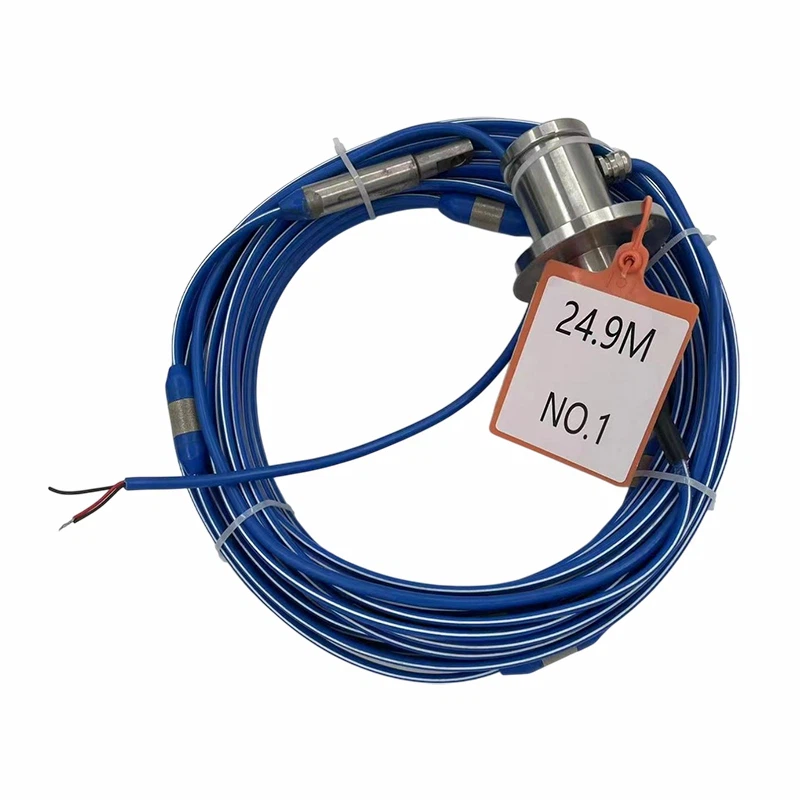
Another way to ensure the effectiveness of a moisture-proof cable is to use monitoring cables. For example, the Grain Storage Moisture Control Monitoring Cable can be used to monitor the moisture levels in a grain storage facility. These cables are designed to be moisture-proof and can provide real-time data on the moisture content of the environment.
Similarly, the Grain Moisture Cable is specifically designed for measuring the moisture content of grain. It can be used in conjunction with a Smart Temperature And Humidity Controller to maintain the optimal conditions for grain storage.
Conclusion
Testing a moisture-proof cable is an important step in ensuring its effectiveness. By performing visual inspections, resistance testing, insulation resistance testing, dielectric withstand voltage testing, and environmental testing, you can determine if a cable is able to prevent moisture from causing damage.
Using monitoring cables can also provide valuable information about the moisture levels in the environment and help you take proactive measures to protect your equipment.
If you're in the market for high-quality moisture-proof cables, we're here to help. Our cables are designed to meet the highest standards of quality and performance. Whether you need cables for grain storage, industrial applications, or any other use, we've got you covered.
Contact us today to discuss your requirements and let's work together to find the perfect moisture-proof cable solution for you.

References
- Electrical Testing Handbook, Third Edition by Keith Billings
- Cable Testing and Maintenance by Neil Smith