

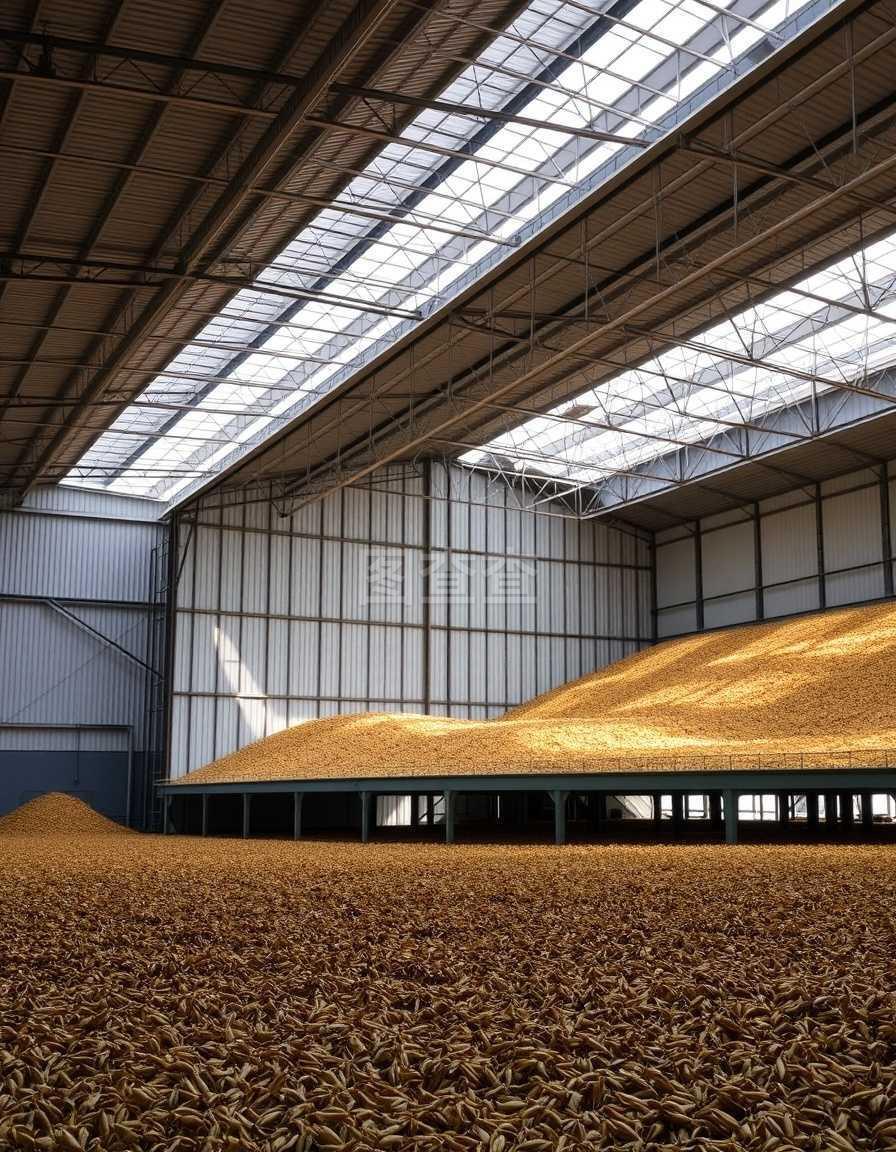
For modern commercial grain storage operators and high-yield farmers, preserving harvested crop quality is a continuous battle against environmental variables. Once grain enters a storage silo, it is highly susceptible to spoilage, insect infestations, and localized heating. To achieve the highest premium on the market and minimize post-harvest losses, deploying a sophisticated grain bin temperature monitoring system is no longer a luxury-it is an operational necessity.
Advanced monitoring systems keep post-harvest crops within precise thermal parameters, enabling operators to detect subterranean hazards before they escalate into catastrophic spoilage. Furthermore, real-time thermal data allows for strategic market timing, allowing you to store grain safely until market prices become financially optimal.
In this comprehensive guide, we will analyze why precision thermal tracking is vital for grain preservation and explore the most effective advanced grain bin temperature monitoring options available to today's agricultural industry.
Why Modern Agriculture Demands Precision Grain Bin Temperature Monitoring
Grain is an excellent natural insulator, meaning it retains heat and transfers it very slowly. Without proper internal diagnostics, a severe localized hot spot can develop in the center of a silo while the surface grain remains perfectly cool. Understanding the multi-faceted dynamics of silo environments reveals why automated grain condition monitoring is critical.
2. Suppression of Fungal Growth and Insect Infestation
Stored grain insects and fungal molds thrive in warm, high-moisture environments. At temperatures above 20°C (68°F), insect populations can explode exponentially within weeks. Mold species not only cause rapid grain spoilage but can also secrete dangerous mycotoxins, making the crop hazardous for human or animal consumption and rendering it unsalable.
Crucially, when mold spores germinate and insects feed, their biological metabolic activity releases latent heat and moisture. This creates a self-accelerating feedback loop where a small hot spot rapidly expands. Utilizing high-precision multi-point temperature collectors allows you to catch these microscopic outbreaks at their exact origin point before they spread through the silo.
3. Dramatic Extension of Safe Storage Time
Lowering and stabilizing grain temperature acts as a pause button on crop degradation. The relationship between temperature, moisture, and safe storage life (SSL) is mathematically profound.
For instance, corn harvested at 16% moisture content can only be safely stored for approximately 47 days at 80°F (26.6°C) before quality degradation begins. However, if that exact same batch of corn is cooled down and maintained at 50°F (10°C), its safe storage window expands to 480 days-more than a tenfold increase. This extreme extension gives agribusinesses the leverage to bypass low harvest-season prices and wait for premium market windows.
4. Mitigation of Seed Germination and Spontaneous Heating
Viable seeds require two catalysts to break dormancy: warmth and moisture. If your storage silo allows internal temperatures to drift upward, any pocket of localized moisture will trigger seed germination. Germinating seeds rapidly consume internal starch reserves, destroying the crop's viability as seed stock and reducing its commercial grade.
5. Prevention of Internal Steam and Grain Adhesion (Caking)
When high-temperature grain meets localized moisture, it releases internal steam. Inside a sealed steel silo, this steam causes individual grain kernels to stick together, a destructive phenomenon known as "caking" or crop adhesion.
Caked grain blocks natural aeration airflow, making it impossible to cool the bin evenly.
Huge crusted chunks of grain can bridge across the bin or adhere heavily to the side walls.
When unloading, these bridges can collapse suddenly, causing catastrophic mechanical failure to sweeps, augers, and even the structural integrity of the grain bin itself.
Advanced Grain Bin Temperature Monitoring Equipment Types
Traditional grain management relied on manual sampling or primitive thermometers, which provided inadequate and delayed data. Today's commercial grain depots utilize integrated electronic systems that combine high-durability hardware with advanced grain condition monitoring software.
High-Precision Temperature Sensor Cables
The structural foundation of any reliable silo diagnostic matrix is the temperature sensor cable. These heavy-duty, reinforced vertical cables are suspended directly from the silo roof structure down to the floor, submerged entirely within the grain mass.
Advanced setups utilize vertical cables embedded with high-precision digital sensors (such as Type K thermocouples, RTDs, or digital NTC thermistors) spaced at regular intervals (typically every 1 to 1.5 meters). This creates a comprehensive 3D thermal grid inside the silo.
Suspended Core Design: Top-tier cables feature high-tensile steel cores to withstand the immense downward drag forces exerted on the cables during grain cleanout and unloading.
Multi-Point Precision: Rather than giving an average reading of the bin, these multi-point sensors read specific coordinates, allowing software to pinpoint the exact depth and radius of an emerging hot spot.
Automated Fan and Aeration Control Systems
Monitoring data is only as good as the action it triggers. Advanced setups link grain bin temperature cables directly to automated aeration fan controllers.
When sensor cables detect that the internal grain temperature has crossed a predefined threshold, or when ambient outdoor weather conditions are perfectly optimized for cooling (low humidity and cool air), the system automatically engages the ventilation fans. Automated fan systems optimize electrical energy consumption by running fans only when the ambient air will actively benefit the grain, eliminating unnecessary runtime and reducing shrinkage.
Integrated Tracking, Remote Telemetry, and Software Dashboards
Modern grain storage management happens on a screen, not on a ladder. While budget-conscious setups might use local digital readouts mounted to the exterior wall of each bin, commercial enterprises utilize remote telemetry units (RTUs) and cloud-based software platforms.
On-Site Edge Processing: Multi-point temperature and humidity collectors route raw sensor data to a centralized PLC or wall-mounted control panel.
Cloud Telemetry: Data is transmitted wirelessly (via cellular, LoRaWAN, or Wi-Fi) to a cloud database.
Predictive Software Analytics: Users can log into web or mobile dashboards to view 3D heat maps of their silos. Advanced software doesn't just show current temperatures; it tracks historical trends, generating automatic text or email alerts if a specific sensor node exhibits a rapid rate-of-rise (RoR), indicating early-stage pest or mold activity.
Conclusion: The Ultimate ROI of Advanced Monitoring
Transitioning from passive storage to active grain bin temperature monitoring is a critical step in modern post-harvest management. By investing in commercial-grade temperature sensor cables, robust multi-point data collectors, and automated aeration controls, you remove the guesswork from grain preservation. You gain the ability to prevent mold, halt insect outbreaks, avoid structural grain bridging, and hold your commodity until the market offers maximum financial returns.
For grain storage operations looking to safeguard their assets, integrating high-performance hardware with real-time digital monitoring ensures that every bushel maintains its premium grade from harvest to sale.