

1. Introduction to Safe Grain Storage
Grain storage is an essential stage of post-harvest management. Rice, wheat, corn, and soybeans have different physical characteristics, moisture absorption properties, and storage requirements. Therefore, effective grain storage requires appropriate management strategies based on grain type, initial moisture content, storage temperature, and environmental conditions.
Excessive moisture, abnormal temperature changes, inadequate ventilation, and pest infestation can lead to grain heating, mold growth, quality deterioration, and post-harvest losses.
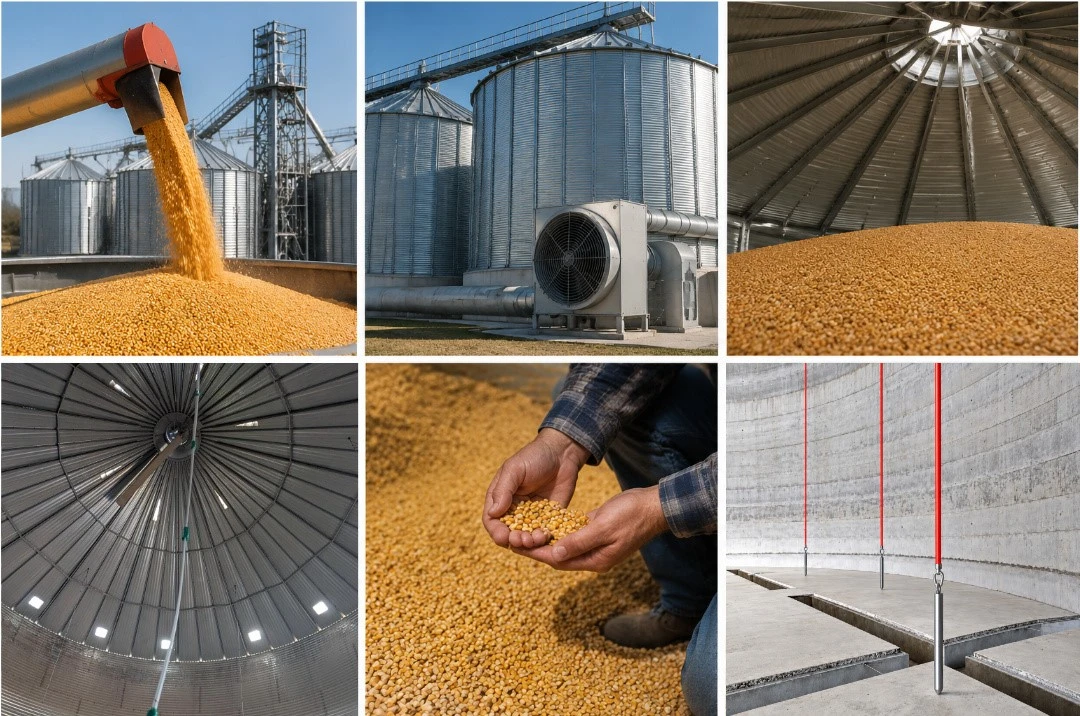
Effective grain storage management generally involves the following measures:
Moisture control
Dry grain to an appropriate moisture level before long-term storage.
Temperature management
Reduce grain temperature when conditions are suitable to help limit respiration and quality deterioration.
Ventilation management
Determine suitable ventilation periods based on grain temperature, moisture content, and ambient conditions.
Moisture and mold prevention
Prevent roof leaks, condensation, and moisture intrusion.
Pest management
Inspect stored grain and storage facilities regularly.
Grain condition monitoring
Monitor temperatures at different positions within the grain mass to identify abnormal changes promptly.
2. Rice Storage Methods
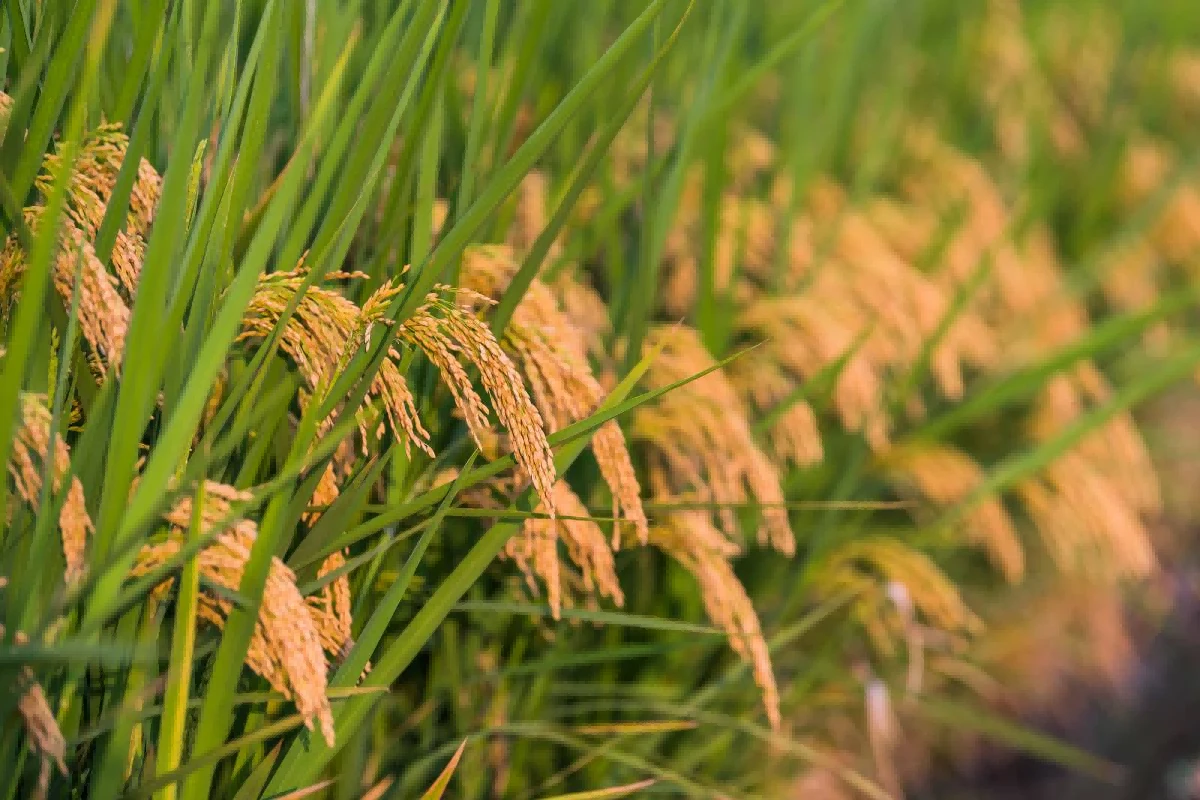
2.1 Characteristics of Rice Storage
Rice grains are protected by relatively hard husks, which provide some resistance to external environmental changes and certain types of pest damage. However, rice can germinate when exposed to excessive moisture and is sensitive to unsuitable high-temperature conditions. Careful moisture and temperature management is therefore essential.
Susceptibility to germination
Rice may germinate before harvest if wet weather delays harvesting, threshing, or drying. During storage, roof leaks, moisture absorption, and condensation can also create conditions favorable for germination.
Risk of quality deterioration
Delayed drying or prolonged accumulation of high-moisture rice can lead to heating, yellowing, and mold development.
Condensation risks
When newly harvested rice is stored and ambient temperatures subsequently fall, condensation may occur near the grain surface. Localized moisture increases can reduce storage stability.
2.2 Recommended Rice Storage Practices
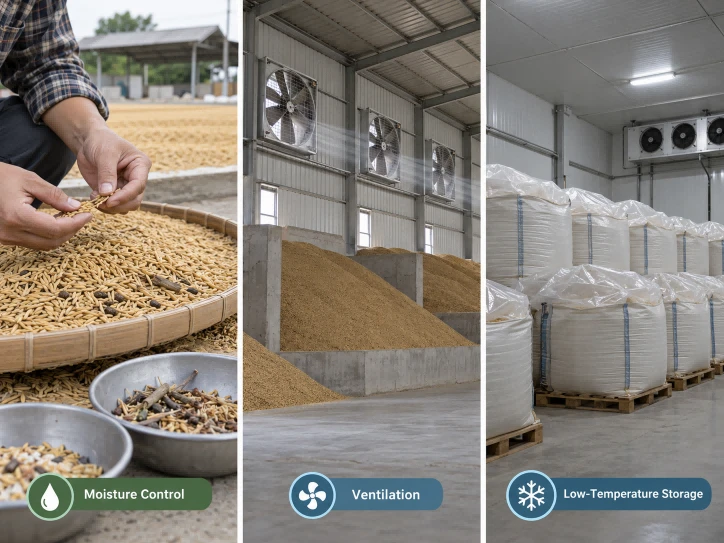
1.Control Moisture Content and Impurities
Before storage, rice should be inspected for moisture content, impurities, and damaged or immature kernels. Rice with excessive moisture should be dried promptly, while impurities should be removed through appropriate cleaning methods.
Rice with different moisture levels or quality grades should be stored separately where necessary to reduce the risk of localized heating and deterioration.
2.Use Ventilation to Reduce Temperature
Freshly harvested rice generally has relatively active respiration. Ventilation should be scheduled according to grain temperature, moisture content, and ambient conditions.
During cooler autumn weather, natural or mechanical ventilation can help remove accumulated heat and moisture. Grain surface conditions and temperature differences within the grain mass should also be monitored to reduce condensation risks.
3.Apply Low-Temperature Storage and Sealing
During winter, suitable cold and dry weather can be used to reduce grain temperature. Before temperatures rise in spring, insulation, covering, and appropriate sealing measures may help maintain favorable storage conditions.
Sealing alone cannot compensate for excessive grain moisture. Rice should be dried to a suitable level before long-term storage.
3. Wheat Storage Methods
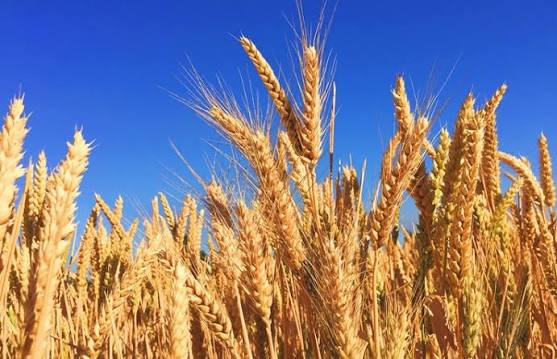
3.1 Characteristics of Wheat Storage
Wheat generally has good storage stability when properly dried and managed. However, its relatively thin seed coat and moisture absorption characteristics make moisture control important. Wheat can also be vulnerable to stored-grain pests, particularly around harvest and initial storage.
Strong moisture absorption
Wheat can absorb moisture from humid environments, making effective drying and moisture protection essential.
Post-harvest maturation
Newly harvested wheat typically undergoes a post-harvest maturation process. Under suitable conditions, this process can gradually improve storage stability.
Good storage potential
Wheat with appropriate moisture content and temperature can maintain acceptable quality over extended storage periods.
Susceptibility to insect infestation
Stored-grain pests, including weevils and grain moths, may infest wheat during harvesting, transportation, and storage. Warehouse sanitation and regular inspections are important preventive measures.
3.2 Recommended Wheat Storage Practices
01.Maintain Appropriate Moisture Levels
Wheat moisture content should be checked before storage. Drying targets should be selected according to the intended storage period, local climate, grain quality, and applicable standards.
A moisture content of approximately 12.5% may be used as a general reference for long-term wheat storage, but the appropriate target depends on local regulations and actual storage conditions.
02.Manage Ventilation Carefully
Natural or mechanical ventilation can be used during cooler seasons when ambient conditions are suitable. The objective is to reduce grain temperature without introducing excessive moisture into the grain mass.
Temperature differences between the grain surface, interior, and surrounding air should be considered to minimize condensation.
03.Use Low-Temperature Storage
Winter conditions can provide an opportunity to cool wheat naturally. Insulation, covering, and appropriate sealing before warmer weather arrives can help maintain lower grain temperatures.
Maintaining suitable moisture and temperature conditions is important for preserving wheat quality during extended storage.
04.Monitor Stored-Grain Pests
4. Corn Storage Methods
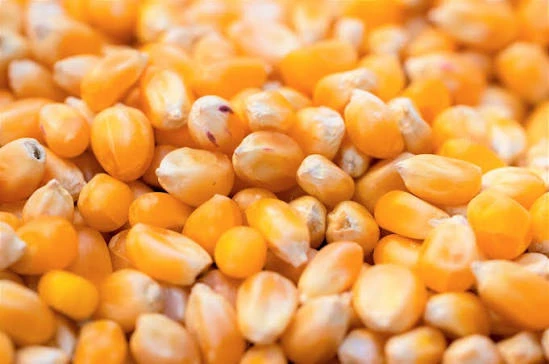
4.1 Characteristics of Corn Storage
Corn may have a relatively high initial moisture content at harvest, and kernel maturity may vary within the same crop. The germ contains substantial nutrients and oil, making moisture and temperature control particularly important.
High initial moisture content
Corn harvested under cool or humid conditions may require additional drying before storage. Storing high-moisture corn for extended periods can increase the risk of heating and mold development.
01
Active respiration
Corn kernels have a relatively large germ. Under favorable moisture and temperature conditions, respiration can contribute to heat accumulation within stored grain.
02
Risk of mold growth
The germ contains nutrients that can support microbial activity. Excessive moisture and favorable temperatures may accelerate mold development and reduce grain quality.
03
Risk of oil deterioration
The oil-rich germ is susceptible to quality deterioration when moisture and temperature conditions are poorly controlled.
04
4.2 Recommended Corn Storage Practices
- Separate Corn by Moisture Content and Quality
Corn should be inspected for moisture content, impurities, and kernel condition before entering storage. Grain with different moisture levels should be stored separately where practical.
Corn with excessive moisture should be dried before long-term storage.
- Dry Corn Promptly
Drying is one of the most important measures for safe corn storage. The drying method and target moisture content should be selected according to the initial moisture level, intended use, storage duration, and available equipment.
Drying should be sufficient to support safe storage while avoiding unnecessary damage to kernel quality.
- Apply Temperature and Ventilation Management
When grain moisture is appropriate, ventilation can help reduce grain temperature and remove accumulated heat. Natural or mechanical ventilation should be based on grain temperature, ambient temperature, and humidity.
Unsuitable ventilation may introduce moisture or contribute to moisture migration and condensation. Conditions should therefore be assessed before ventilation begins.
- Consider Ear Corn Storage
In suitable regions and storage environments, corn can be stored on the cob before shelling. The spaces between ears allow air circulation and can support gradual drying.
However, ear corn still requires adequate ventilation and regular inspection for temperature changes, moisture accumulation, and mold. Shelling should take place when the corn has reached an appropriate condition for subsequent storage.
5. Soybean Storage Methods
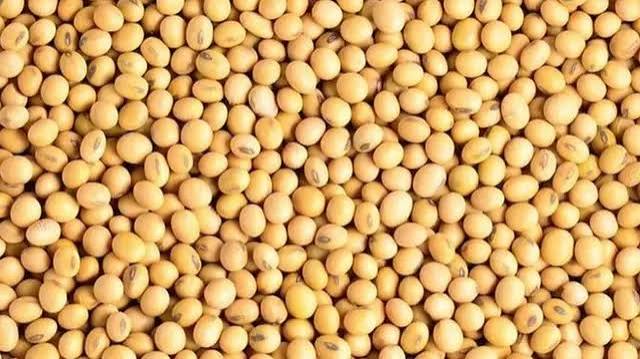
5.1 Characteristics of Soybean Storage
Soybeans are rich in protein and oil. Their relatively smooth, hard seed coats provide some protection, but cracked, damaged, or broken beans are more vulnerable to deterioration.
High humidity and elevated temperatures can cause discoloration, off-odors, reduced germination rates, and oil quality deterioration.
Sensitivity to high humidity
Soybeans can absorb moisture under humid conditions, increasing the risk of mold and quality loss.
Risk of oil deterioration
Inappropriate moisture and temperature conditions can accelerate oil hydrolysis and oxidation, affecting soybean quality and processing performance.
Greater vulnerability of damaged kernels
Cracked seed coats and broken beans have reduced physical protection. Removing damaged kernels before storage can help improve overall storage quality.
Risk of discoloration and oil seepage
Under high-moisture and high-temperature conditions, soybeans may develop reddish discoloration around the germ area. In severe cases, kernels may show oil seepage and seed-coat deterioration.
5.2 Recommended Soybean Storage Practices
01.Dry Soybeans Thoroughly
Soybeans should be checked for moisture content after harvesting and threshing. Drying should be carried out promptly when necessary.
A moisture content of approximately 12.5% or lower may serve as a general reference for long-term soybean storage. The appropriate target should be determined according to soybean variety, intended use, storage duration, and applicable local standards.
02.Ventilate to Remove Heat and Moisture
Moisture may be unevenly distributed in newly stored soybeans. Heat and moisture can also accumulate within the grain mass.
Ventilation should be scheduled according to grain temperature, moisture content, and ambient conditions to reduce heat accumulation and improve storage stability.
03.Maintain Low Temperature and Prevent Moisture Intrusion
During winter, suitable low-temperature conditions can help reduce grain temperature. Insulation, appropriate sealing, and moisture protection can help limit the influence of external environmental changes.
Care should be taken to prevent warm, humid air from entering the grain mass and causing condensation.
04.Inspect Grain Quality Regularly
| Grain Type | Main Storage Risks | Recommended Management Priorities |
|---|---|---|
| Rice | Germination, condensation, heating, quality deterioration | Moisture control, appropriate ventilation, surface temperature monitoring |
| Wheat | Moisture absorption, insect infestation, condensation | Drying, moisture protection, low-temperature management, pest monitoring |
| Corn | High initial moisture, mold growth, oil deterioration | Prompt drying, separate storage by moisture level, temperature monitoring |
| Soybeans | Moisture absorption, discoloration, oil deterioration | Thorough drying, moisture protection, cooling, regular quality inspection |
FAQ
Q: Can rice, wheat, corn, and soybeans use the same storage methods?
A: Not entirely. Each grain type has different moisture absorption characteristics, respiration activity, kernel structure, and oil content. Storage procedures should be adjusted to the grain type and actual storage conditions.
Q: Why is moisture control important before grain storage?
A: Excessive moisture can increase respiration and microbial activity, raising the risk of heating, mold growth, and quality deterioration. Grain moisture should be checked before storage, and drying should be performed when necessary.
Q: Why do large grain silos need multi-point temperature monitoring?
A: Temperature can vary at different positions within a grain mass. Multi-point monitoring helps operators understand temperature distribution, identify localized increases, and investigate potential storage problems.
Q: What equipment is included in a grain temperature monitoring system?
A: A typical system may include multi-point temperature cables, temperature sensors, data acquisition units, communication equipment, and monitoring software. The final configuration depends on the facility layout, measurement requirements, and communication infrastructure.
Q: How often should grain temperature be checked during storage?
A: Inspection frequency depends on grain type, moisture content, storage stage, ambient conditions, and the level of storage risk. Automated monitoring can provide more continuous temperature data, but equipment operation and grain conditions should still be inspected regularly.