

Grain storage is an important part of agricultural production. After harvest, farmers must protect their crops from moisture, insects, mold, and temperature changes before the grain is sold, processed, or consumed.
However, grain that looks dry and clean on the surface may still develop problems during storage. Broken kernels, excess moisture, poor ventilation, and internal heating can gradually reduce grain quality. In large storage bins, these problems may remain hidden for weeks.
Good grain storage management begins with proper cleaning and drying, followed by regular grain inspections, temperature monitoring, and appropriate ventilation.
This guide explains practical grain storage methods for small farmers, agricultural cooperatives, and commercial grain storage operators. It also introduces how modern grain temperature monitoring cables can support safer and more efficient storage.
1. Why Is Scientific Grain Storage Important?
Harvesting grain is only the beginning of post-harvest management. Once grain enters a storage container or silo, its condition continues to change in response to temperature, moisture, and the surrounding environment.
Grain is a natural insulator. Heat can remain trapped inside a large grain bulk, while temperature differences between the center and outer areas may cause moisture to migrate.
When unfavorable conditions persist, localized heating, mold growth, insect activity, and grain deterioration may follow.
The main risks during grain storage include:
|
Storage risk |
Possible cause |
Preventive measure |
|---|---|---|
|
Mold growth |
Excessive moisture and favorable temperatures |
Proper drying and moisture testing |
|
Insect infestation |
Contaminated grain or favorable storage conditions |
Cleaning, inspection, and temperature control |
|
Grain hot spots |
Localized biological activity or uneven temperature |
Multi-point temperature monitoring |
|
Moisture migration |
Temperature differences within the grain bulk |
Controlled aeration and cooling |
|
Grain caking |
Moisture accumulation and deterioration |
Regular inspection and moisture management |
|
Storage losses |
Delayed detection and poor management |
Routine monitoring and timely intervention |
The objective is not simply to keep grain inside a container. It is to maintain stable storage conditions throughout the entire storage period.
For more information on different crop storage requirements, read our related article: Grain Storage Methods: A Complete Guide to Storing Rice, Wheat, Corn, and Soybeans.
2. How Should Farmers Remove Impurities Before Grain Storage?
Grain harvested from the field often contains impurities such as straw fragments, dust, chaff, weed seeds, stones, and broken kernels.
If these materials are not removed, they may interfere with airflow inside the storage bin. Broken grain and accumulated fines may also create areas that are more vulnerable to insects and moisture-related deterioration.
Cleaning grain before storage is therefore an important step in reducing post-harvest losses.
2.1 Winnowing: Separating Grain Using Airflow
Winnowing is one of the oldest grain cleaning methods used by farmers.
The process involves allowing grain to fall through moving air. Lighter materials, including dust, chaff, and some lightweight seeds, are carried away, while heavier grain kernels fall into a collection area.
Winnowing can be performed manually or with mechanical equipment.
For small farms, traditional winnowing may be sufficient for preliminary cleaning. However, it is less effective at removing stones or other impurities with a similar weight to grain kernels.
2.2 Grain Cleaning with a Winnowing Fan
Mechanical grain cleaning fans use controlled airflow to separate grain from lighter impurities.
As grain passes through the machine, air carries away dust, husks, and lightweight foreign materials. Clean grain is collected separately.
Compared with manual methods, mechanical cleaning can improve processing efficiency and consistency, particularly when handling larger quantities of wheat, rice, or corn.
Operators should adjust airflow according to grain type and kernel condition to avoid unnecessary grain loss during cleaning.
2.3 Sieving: Removing Impurities by Size
Sieving separates grain from foreign materials based on differences in particle size and shape.
A suitable screen allows smaller impurities to pass through while retaining larger grain kernels. In other applications, the screen may allow grain to pass while removing oversized straw fragments or other unwanted materials.
Different screens can be combined to remove:
- Fine dust and small particles
- Broken kernels and undersized material
- Straw and oversized foreign objects
- Some weed seeds and stones
For larger farms, mechanical vibrating screens can process higher grain volumes and provide more consistent cleaning results.
2.4 Comparison of Grain Cleaning Methods
|
Cleaning method |
Main purpose |
Recommended application |
Limitation |
|---|---|---|---|
|
Manual winnowing |
Remove lightweight impurities |
Small farms |
Depends on airflow and operator skill |
|
Mechanical air cleaning |
Separate chaff, dust, and light particles |
Small and medium farms |
Limited separation of similarly weighted materials |
|
Manual sieving |
Separate materials of different sizes |
Small grain quantities |
Labor-intensive |
|
Vibrating screen cleaning |
Remove multiple impurity sizes |
Cooperatives and larger farms |
Requires equipment investment |
|
Combined air and screen cleaning |
Improve overall cleaning efficiency |
Commercial grain storage |
Requires appropriate machine adjustment |
For farmers operating steel silos or large grain warehouses, removing excessive fines is particularly important because accumulated impurities can reduce airflow uniformity during aeration.
Grain cleaning improves storage conditions, but it cannot replace proper drying and temperature monitoring.
3. How Can Farmers Check Grain Conditions During Storage?
Grain inspection should continue throughout storage, even when the grain was properly cleaned and dried before entering the bin.
A practical grain inspection program should examine appearance, temperature, moisture, insects, and rodent activity.
3.1 Visual and Sensory Inspection
The first step is to observe the grain's appearance and smell.
Healthy stored grain generally retains the expected color and odor of its variety. Signs such as unusual discoloration, musty odors, clumping, or visible mold require further investigation.

Farmers should pay attention to the following conditions:
Changes in grain color or surface appearance
Unusual or musty odors
Grain clumping or crust formation
Moisture or condensation near the storage roof
Damaged grain kernels or insect residues
Visual inspection is useful, but it has an important limitation: many storage problems begin deep inside the grain bulk before they become visible.
3.2 Grain Temperature Inspection
emperature is one of the most useful indicators of changing conditions inside stored grain.
Traditionally, farmers inserted a hand or metal probe into the grain to estimate its temperature. While this may help identify severe heating near an accessible area, it cannot reliably detect hidden hot spots deeper inside a large grain pile.
Modern grain storage facilities use electronic temperature sensors to measure grain temperatures more accurately.
For small storage bins, portable temperature probes may be sufficient. For larger silos, permanently installed multi-point temperature monitoring cables provide measurements at several depths.
These cables allow operators to compare temperatures between different grain layers and detect unusual changes that might otherwise remain unnoticed.
Learn more about Grain Temperature Monitoring Cables and their role in modern grain storage.
3.3 Why Temperature Trends Matter More Than One Reading
A single temperature reading provides information about grain conditions at one moment. However, it does not show whether the grain is cooling, warming, or remaining stable.
For example, suppose a sensor inside a wheat silo records the following temperatures:
|
Inspection day |
Temperature |
Observation |
|---|---|---|
|
Day 1 |
18.5°C |
Initial measurement |
|
Day 3 |
19.1°C |
Slight increase |
|
Day 5 |
21.0°C |
Continued warming |
|
Day 7 |
24.2°C |
Noticeable temperature rise |
|
Day 9 |
27.5°C |
Requires prompt investigation |
Example: Developing Temperature Hot Spot
Illustrative sensor readings, not an actual field measurement
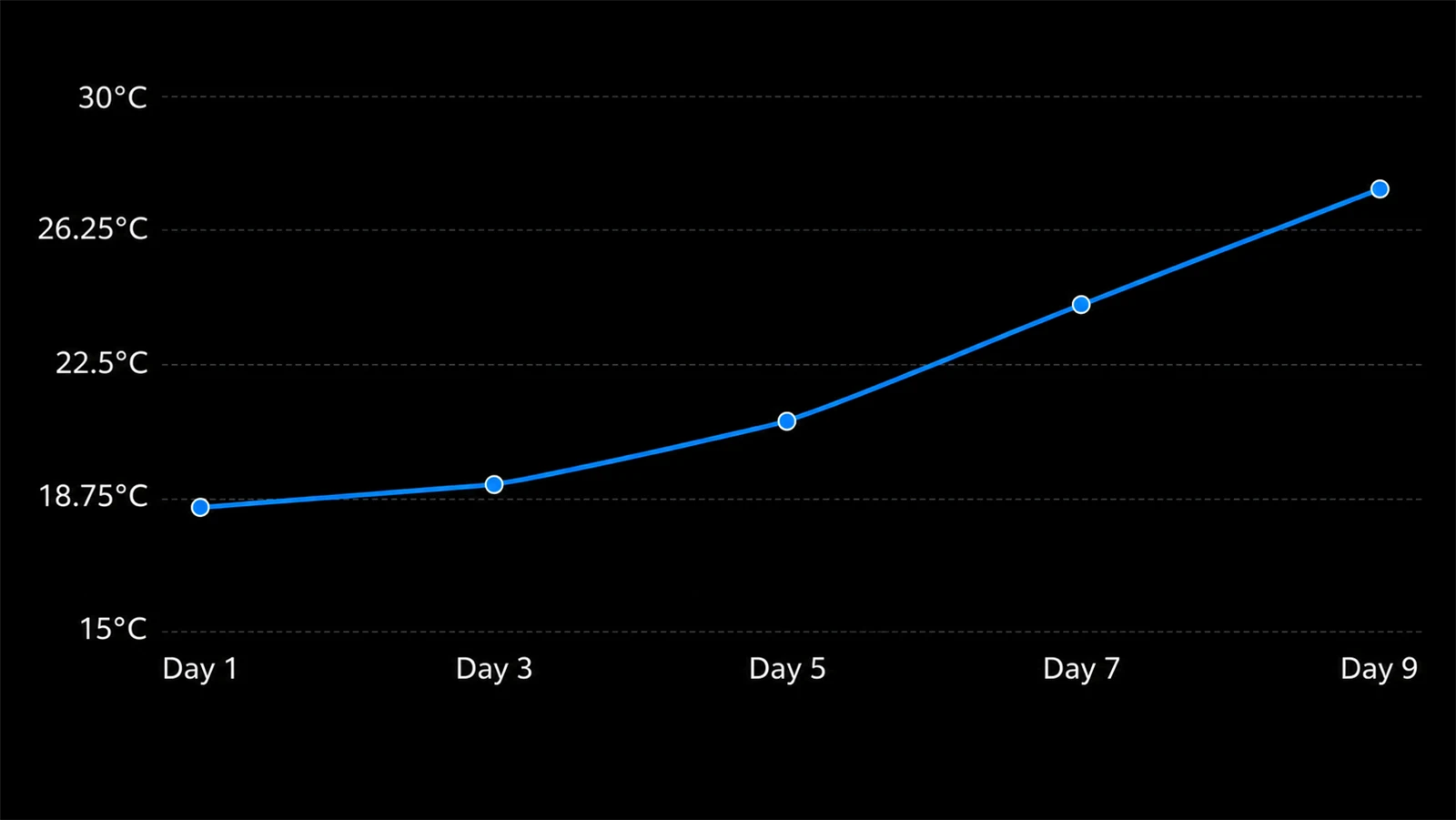
Although the temperature on Day 5 may not appear extremely high, the sustained increase suggests that conditions inside the grain bulk are changing.
Possible causes include microbial activity, insect infestation, moisture accumulation, or differences in aeration and ambient conditions.
The correct response is to inspect the affected area, compare neighboring sensor readings, check moisture, and determine whether cooling or other action is required.
For a deeper explanation, see Learn the Little-known Facts About Grain Storage.
3.4 Grain Moisture Content Inspection
Moisture content directly affects storage stability.
Traditional methods, such as biting grain kernels to estimate hardness, may give farmers a rough impression of grain condition. However, they are not accurate enough to determine safe moisture content.
A calibrated grain moisture meter provides a more reliable measurement.
Farmers should measure grain moisture before storage and check it again during the storage period, especially when condensation or unexplained heating is suspected.
The appropriate moisture content depends on the crop, expected storage period, temperature, and local storage requirements.
3.5 Insect Inspection
Insects can cause significant damage to stored grain through feeding, contamination, and increased biological activity.
Farmers should inspect the surface and accessible sampling locations for live insects, damaged kernels, and insect residues.
When practical, grain samples should be collected from several locations and examined using a suitable sieve or inspection tray.
Monitoring grain temperature can also help identify unusual heating associated with insect activity, although temperature data alone cannot confirm an infestation.
3.6 Rodent Inspection
Rodents damage stored grain and may contaminate grain with droppings and other materials.
Inspect storage walls, doors, ventilation openings, and the surrounding area for signs of rodent activity.
Repair structural openings, remove spilled grain, and maintain cleanliness around the storage facility.
4. How Can Large Farms Reduce Grain Storage Losses?
Large agricultural operations handle greater grain volumes, making effective storage management more important.
When large quantities of grain are stored together, delayed detection of heating or moisture problems may result in significant economic losses.
Large farmers and agricultural cooperatives should consider storage structures, drying capacity, ventilation systems, and temperature monitoring equipment when planning their facilities.
4.1 Steel-Frame Mesh Corn Crib Storage
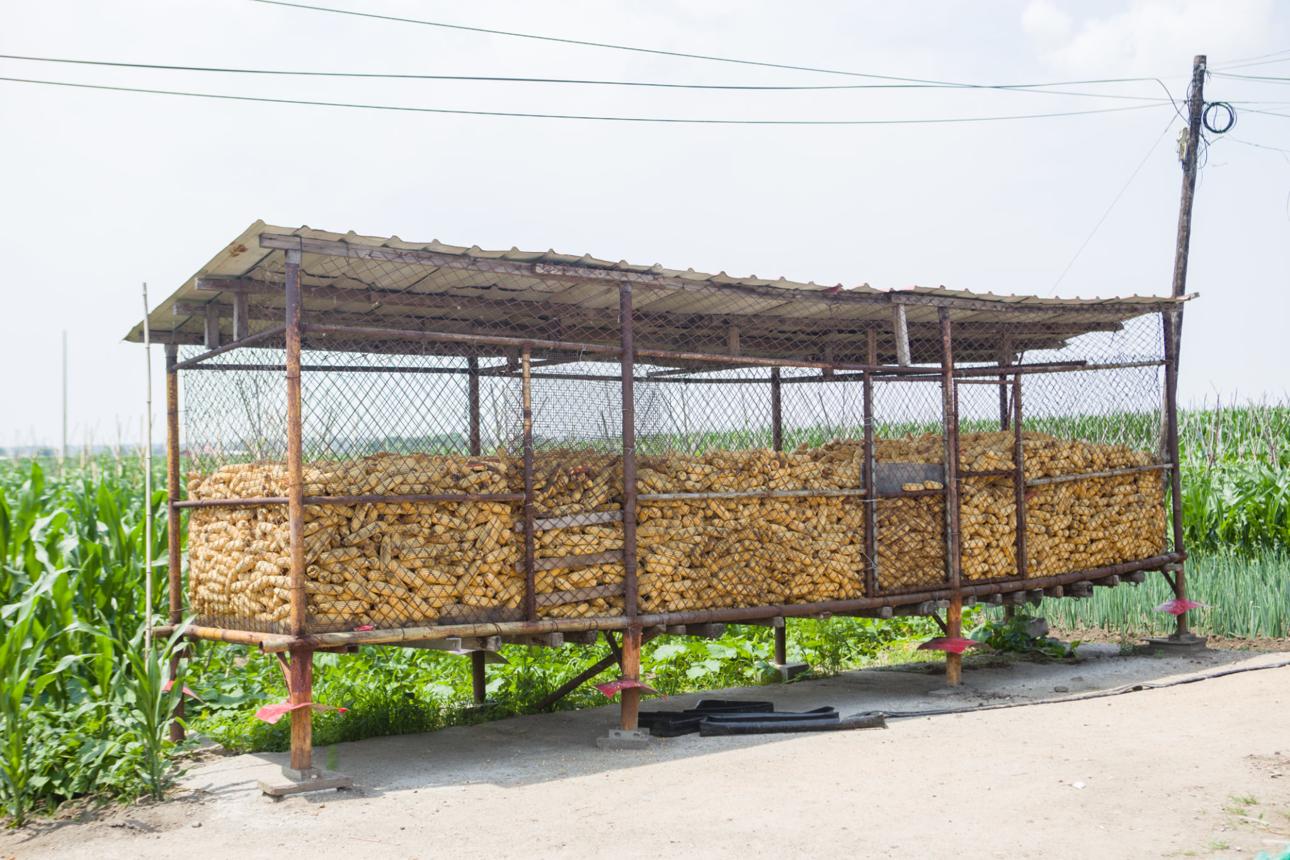
In some cold-climate agricultural regions, harvested corn ears can be stored in well-ventilated steel-frame mesh structures.
These structures allow natural airflow through the stored corn and can support moisture reduction when suitable outdoor drying conditions are available.
Their advantages include relatively simple construction, natural ventilation, and low operating energy requirements.
However, successful storage depends on several factors, including initial moisture content, local climate, crib dimensions, airflow, and storage duration.
Very wet corn should not be assumed safe for long-term storage simply because a mesh structure is used. Operators should monitor moisture reduction, inspect for mold, and move or dry the corn when necessary.
4.2 Steel Grain Silos for Commercial Storage
Steel grain silos are widely used by commercial farms, grain cooperatives, and agricultural processing facilities.
They can be manufactured using galvanized corrugated steel panels or welded steel structures, depending on design requirements.
Compared with traditional farm storage containers, modern steel silos can be equipped with mechanical loading and unloading equipment, grain cleaning systems, aeration fans, and electronic monitoring devices.
A well-designed steel silo system may include:
Grain cleaning and conveying equipment
Suitable drying equipment
Ventilation and aeration systems
Grain temperature monitoring cables
Temperature and humidity data acquisition devices
Computer-based grain monitoring software
The storage capacity and equipment configuration should be selected according to grain type, storage duration, site conditions, and operational requirements.
For facilities storing grain for extended periods, installing a reliable Grain Temperature Monitoring System can help operators track changing conditions inside the silo.