

Grain storage may appear simple on the surface, but in reality it is a highly specialized process that depends on continuous monitoring and scientific management. During storage, grain is constantly influenced by temperature, moisture, microorganisms, insects, and environmental conditions. If these factors are not properly controlled, they can lead to hot spots, mold growth, insect infestation, quality deterioration, and even significant economic losses. For this reason, understanding the condition of grain inside a storage facility has always been one of the most important tasks in grain warehouse management. The development of grain temperature monitoring technology reflects the broader transformation of the grain storage industry from manual inspection to digital management and, increasingly, intelligent automation.

The Era of Manual Temperature Inspection
Before electronic technology became widely available, grain warehouses relied primarily on temperature probe rods to monitor grain conditions. Early probe rods often contained mercury thermometers and were inserted into different depths of the grain mass. After allowing sufficient time for the temperature to stabilize, operators would remove the probe and manually record the reading.
To obtain a representative picture of grain conditions, measurements had to be taken at multiple locations throughout the warehouse, including the center, corners, upper layers, middle layers, and lower layers of the grain bulk. This process was labor-intensive and time-consuming. Warehouse workers frequently walked across grain surfaces in extreme summer heat or winter cold to collect data. Since measurements were performed periodically rather than continuously, temperature problems were often discovered only after they had already developed. Grain management during this period depended heavily on experience, routine inspections, and manual record keeping.

The Introduction of Electronic Temperature Probes
As electronic sensing technology advanced, thermistors, platinum resistance sensors, and other electronic temperature elements gradually replaced traditional mercury thermometers. Digital handheld temperature meters became common tools in grain warehouses, allowing operators to obtain readings more quickly and with improved accuracy.
Compared with mercury thermometers, electronic probes provided clearer digital displays, faster response times, and reduced reading errors. Data collection became more convenient, and temperature measurements could be recorded more efficiently. However, the monitoring process still relied on personnel physically entering storage facilities and taking measurements manually. Although electronic probes represented an important technological improvement, they did not fundamentally change the inspection-based nature of grain temperature monitoring.
As grain storage facilities expanded and management requirements increased, the industry began seeking methods that would allow permanent monitoring points inside grain bulks and eliminate the need for repeated manual measurements.

The Rise of Temperature Monitoring Cables
The introduction of grain temperature monitoring cables marked a major turning point in grain storage management. Unlike portable probes, temperature cables are installed before grain is loaded into a storage structure and remain permanently embedded within the grain mass throughout the storage period.
Each cable contains multiple temperature sensors positioned at different depths, allowing simultaneous monitoring of temperatures throughout the grain bulk. Since measurement points remain fixed, managers can continuously observe temperature trends and identify developing problems much earlier than was possible with periodic manual inspections.
Temperature cables significantly improved both monitoring efficiency and data quality. Continuous temperature records made it possible to identify localized heating, heat migration patterns, and other early indicators of grain deterioration. Today, temperature cables are considered standard equipment in many grain storage facilities, including flat warehouses, concrete silos, and steel silos.
Advances in cable design have further enhanced performance and durability. Modern products such as dual-steel-wire temperature cables and armored replaceable-core temperature cables offer improved tensile strength, longer service life, and easier maintenance. Manufacturers such as Langfang Zhaosui Temperature Cable Co., Ltd. continue to develop customized solutions for different silo structures and storage environments, helping grain operators achieve more reliable long-term monitoring.

Electronic Grain Monitoring Systems
As the number of monitoring points increased from dozens to hundreds or even thousands, manual data collection became impractical. This challenge led to the development of electronic grain monitoring systems that integrated temperature cables, data acquisition devices, communication networks, and computer software.
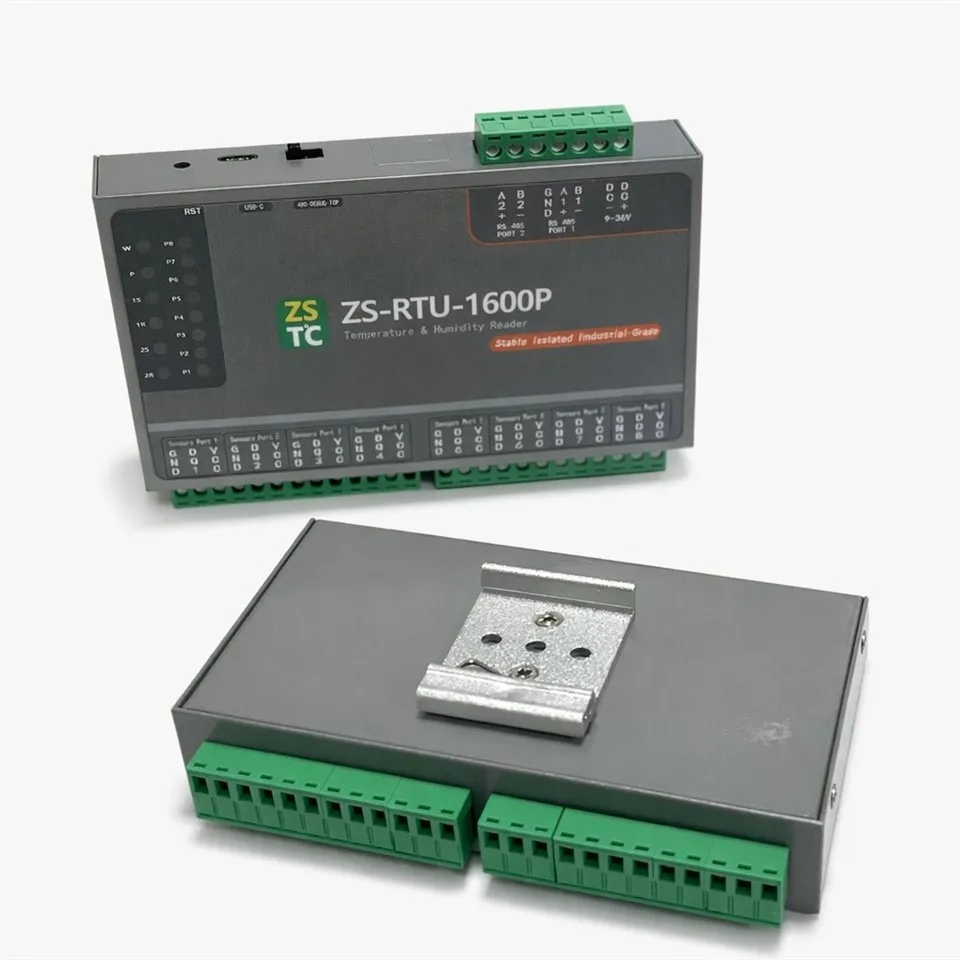
In these systems, temperature data collected from monitoring cables are transmitted to data loggers, acquisition units, or RTUs. Information is then transferred through communication networks such as RS485 or Ethernet to a central computer or monitoring platform. Warehouse managers can view temperature distributions, historical trends, and alarm information without entering the storage facility.
Visualization tools such as temperature maps, trend curves, and three-dimensional temperature profiles provide a much clearer understanding of grain conditions. When abnormal temperature increases occur, the system can generate immediate alerts, allowing operators to take corrective actions such as aeration or grain movement before serious problems develop. This shift transformed grain management from reactive problem-solving to proactive risk prevention.
Intelligent Grain Monitoring and Control Systems
Modern grain management systems have evolved far beyond temperature monitoring alone. Advances in IoT technology, cloud computing, automation, and sensor integration have enabled the development of intelligent grain monitoring and control platforms that combine monitoring, analysis, decision support, and equipment control within a single system.
In addition to grain temperature, these systems can monitor warehouse temperature and humidity, ambient weather conditions, carbon dioxide concentration, oxygen levels, phosphine gas concentration, and insect activity. By analyzing multiple data sources simultaneously, intelligent systems provide a comprehensive assessment of grain storage conditions.
More importantly, these systems can automatically control storage equipment based on monitoring results. Aeration fans, grain cooling units, air-conditioning systems, and controlled-atmosphere equipment can be activated when conditions require intervention. For example, when outside temperatures become favorable for cooling grain, the system may automatically initiate aeration. If gas concentrations indicate potential storage issues, managers can receive immediate warnings and recommended corrective actions.
This integration of monitoring and control significantly improves operational efficiency while reducing reliance on manual decision-making.

The Future: AI-Powered Smart Grain Ecosystems
While previous technological developments focused primarily on measuring grain temperature, the next generation of grain storage systems will focus on comprehensive perception, prediction, and autonomous decision-making. Artificial intelligence, machine vision, hyperspectral imaging, digital twins, and advanced sensing technologies are expected to reshape the future of grain storage management.
One of the most anticipated breakthroughs is real-time online grain moisture monitoring. Moisture is one of the most critical factors affecting grain quality and storage stability, yet most current moisture measurements still depend on manual sampling and laboratory testing. Emerging technologies such as microwave sensing, radio-frequency analysis, and near-infrared spectroscopy may eventually allow continuous monitoring of moisture throughout the grain bulk. Similar to today's temperature distribution maps, future systems may generate three-dimensional moisture distribution models that reveal developing risks before they become visible.
Artificial intelligence is also expected to revolutionize insect monitoring. Current insect detection methods often require manual identification and counting. Future AI-powered vision systems will be capable of automatically recognizing insect species, estimating population levels, tracking infestation trends, and predicting future outbreaks. Rather than simply reporting the presence of insects, these systems may recommend or even automatically implement targeted control strategies.
Quality analysis technology is another area with tremendous potential. Traditional grain quality testing typically involves sampling, grinding, laboratory preparation, and chemical analysis. In the future, advanced technologies such as hyperspectral imaging, Raman spectroscopy, terahertz sensing, and AI-driven pattern recognition may enable rapid non-destructive quality assessment. A simple scan could provide information about moisture content, protein levels, fat content, grain density, fungal contamination, quality grade, and storage risk within seconds.
From Temperature Monitoring to Intelligent Decision-Making
The history of grain temperature monitoring reflects the broader modernization of grain storage management. The industry has progressed from manual temperature inspections using probe rods, to embedded temperature cables, electronic monitoring systems, and intelligent control platforms. Each technological step has improved efficiency, enhanced grain safety, and reduced storage losses.
In the coming decades, grain warehouses are likely to become fully integrated digital ecosystems capable of continuously monitoring temperature, moisture, gas composition, insect activity, grain quality, and equipment performance. Artificial intelligence will analyze these data streams, predict potential risks, recommend optimal storage strategies, and coordinate automated control systems.
The warehouse manager of the future may no longer focus on reading temperature values. Instead, they will oversee a digital representation of the entire storage facility, complete with real-time temperature maps, moisture distributions, gas concentration models, insect activity forecasts, and quality assessments. The system will not simply identify problems after they occur-it will anticipate them and take preventive action before grain quality is affected.
As the grain storage industry moves toward this vision, temperature monitoring cables, data acquisition devices, and grain monitoring software will remain the foundation of the entire system. They will continue to provide the essential data that enable increasingly intelligent, efficient, and reliable grain storage management for the future.