


In modern large-scale grain boutique operations and silo management, monitoring grain storage temperature, moisture content, and carbon dioxide (CO2) levels is critical to preventing spoilage and insect infestations. Among these, ambient air aeration remains the most widely used method for temperature and moisture control.
However, as grain silos grow larger, the complexity of the grain ecosystem increases exponentially. Many facility managers fall into the trap of assuming that "more cables and denser sensors equal better safety." Based on recent computer simulation data, this article debunks that myth and reveals how to scientifically optimize your grain temperature cable layout to maximize monitoring efficiency while drastically cutting hardware costs.
1. During Aeration: Cracking the "Time Code" of the Cooling Front for Vertical Sensor Spacing
During grain aeration, temperature serves as the most critical, direct metric to evaluate cooling efficiency. When the grain surface is leveled and free of severe peaking, airflow distributes relatively evenly through the mass. Under these conditions, the thermodynamic behavior mimics a distinct layer-by-layer advance: a moving boundary known as the "cooling front" (the interface where cold and warm grain meet) which pushes unidirectionally upward or downward.
However, grain is a notoriously poor conductor of heat. Under a typical design airflow rate of approximately 0.11m3 / min/t/bu), it takes at least 150 hours for the cooling front to completely pass through a deep grain mass. Airflow does not instantly cool the entire silo; instead, it acts like an invisible, slow-moving brush sweeping from one end to the other.

Consequently, the vertical spacing of sensors along a cable must never be guessed. It must be mathematically calculated based on grain depth, front advancement velocity, and the manager's desired inspection frequency:
A. Deep Commercial Silos: Formula-Driven Engineering
-
60-Foot (approx. 18.3m) Grain Depth: The cooling front advances at a speed of:
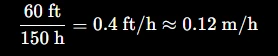
If a grain manager wants to record meaningful cooling-front progress twice per day, or approximately every 12 hours, the recommended vertical sensor spacing along the temperature cable can be estimated as:

-
90-Foot (approx. 27.4m) Grain Depth: With greater depth under the same design airflow, the front advances faster:

To maintain the same ~12-hour inspection cycle, the optimal vertical sensor spacing should widen to:

B. Shallow On-Farm Bins: The Danger of "Over-Engineering"
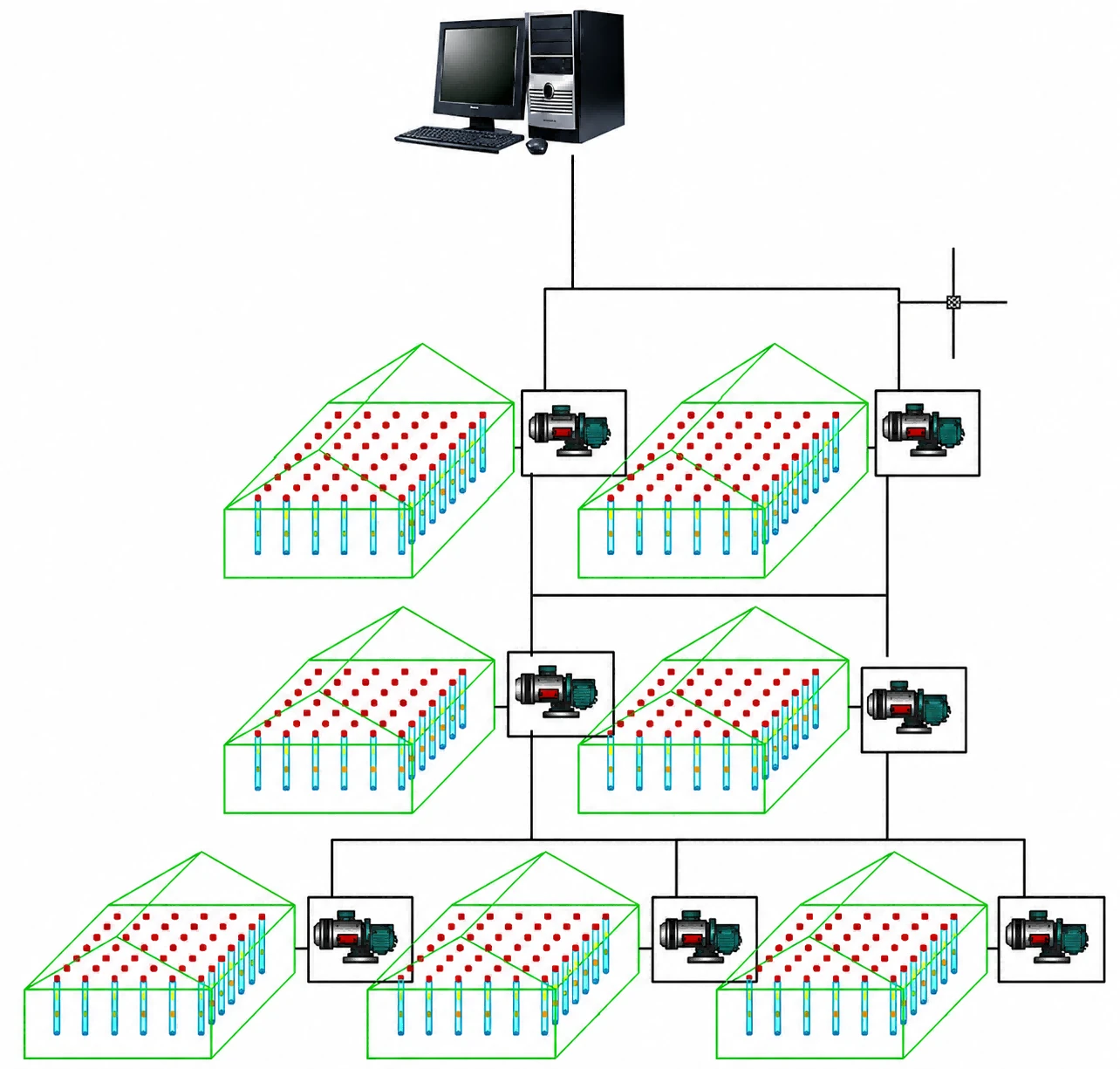
Conversely, in shallow on-farm drying bins, airflow rates can skyrocket up to 1.1m3 / min / t(1.0 cfm/bu). In a 30-foot (approx. 9.1m) deep grain mass, the cooling front completely sweeps through the silo in just 15 hours, meaning it blasts forward at a velocity of 2 ft/hr.
If designers blindly stick to old superstitions and space sensors every 3 feet (approx. 0.91m), the cooling front will cross a new sensor layer every 1.5 hours. Because cooling is a gradual, thermodynamic process, such rapid data refreshes yield zero actionable insights for management decisions. Instead, they overwhelm the system with "data noise"-a classic case of high-cost, low-return over-engineering.
2. During Storage: Why Traditional Layouts Leave "Blind Spots"
Once the aeration fans are turned off and the grain enters the static storage phase, the thermodynamic behavior shifts entirely. Grain is an excellent insulator. If a silo is properly sealed, the core temperature can remain low for months. Instead, temperature fluctuations during storage are driven by ambient weather-specifically solar radiation hitting the silo roof and walls.
1. The Silo Wall is the Ultimate "Fluctuation Zone"

Data indicates that from autumn to late spring, the grain layer closest to the silo wall-within about 3 feet (1m)-experiences the most drastic temperature swings. Unfortunately, standard commercial cable layouts rarely position sensors close enough to the wall, leaving this high-risk zone completely unmonitored.
2. Counter-Intuitive Truth: More Sensors $\neq$ More Value

Computer models simulating a full year of storage yielded a surprising result regarding average temperature prediction:
Data provided by just 15 sensors spaced 9 feet apart across 4 cables (60 nodes total) was just as informative as the average temperature predicted by 2,000 sensors.
This proves that blindly stacking redundant sensors inside the core mass does not improve management quality; it only inflates installation and maintenance budgets.
3. How to Optimize Your Temperature Cable Layout (Actionable Tips)
To build a more effective and cost-efficient smart grain monitoring system, cable manufacturers and facility engineers should adjust their layouts based on the distinct phases of storage:
| Monitoring Phase | Core Focus Area | Cable & Sensor Strategy |
| Aeration (Cooling) | Tracking the progress of the cooling front. | Optimize vertical sensor spacing on the center cables based on airflow velocity and grain depth. |
| Static Storage | Capturing ambient weather & solar radiation impacts. | Shift focus to the periphery (within 1 meter of the silo wall); reduce redundant internal cables. |
| Peaked Grain Masses | Managing uneven airflow in non-leveled bins. | Keeping a center cable at the peak is non-negotiable, as the cooling front takes 2 to 3 times longer to pass through the peak than the shallower sides. |
Conclusion
Scientific grain temperature monitoring is not about the quantity of hardware, but strategic placement. As commercial silo diameters exceed 30 meters, sticking to old, unbacked cable layout recommendations leads to data redundancy in the core and blind spots near the walls-all while forcing end-users to overpay for hardware.
By revising current installation standards to match how grain actually behaves during aeration versus storage, the industry can transition toward a highly precise, low-cost smart warehousing future.
Curious about how CO2 sensors and temperature cables work together to predict early mold and insect activity? Stay tuned for our next deep dive: "The Effectiveness of Temperature Cables in Detecting Grain Self-Heating and Early Spoilage."
Related recommendations:The Dynamic Nature Of Grain And The Crucial Role Of Sensor Cables in Modern Storage
Related recommendations:Proper Installation Of Grain Temperature Cables Depends On Warehouse Type
Related recommendations:Calculating ROI: Is Investing in Commercial Grain Monitoring Cables Worth It?