

1. Introduction: From Monitoring Concept to Physical Implementation
Grain temperature monitoring is widely recognized as the foundation of safe and modern grain storage. However, understanding why temperature matters is only the first step. The next critical question is how temperature data is actually collected from inside large, complex grain bulks.
As explained in the core article
👉 Grain Temperature Monitoring: The Cornerstone of Safe, Efficient, and Modern Grain Storage,
effective monitoring requires continuous, reliable, and spatially distributed temperature data. Temperature measurement cables are the key physical devices that make this possible.
This article focuses on how temperature measurement cables work inside grain storage systems, how they transform temperature theory into actionable data, and why they are indispensable in modern grain storage facilities.

2. Why Single-Point Sensors Are Not Enough in Grain Storage
Before exploring cable-based systems, it is important to understand why traditional single-point sensors are insufficient for grain storage applications.
Grain temperature is not uniform. As discussed in
🔗 Understanding Grain Temperature: Why It Is the Most Critical Indicator of Grain Condition,
temperature changes originate from biological activity and physical constraints within the grain bulk. These changes often occur locally and gradually, especially in deep or poorly ventilated zones.
A single-point sensor can only reflect conditions at one location. Even multiple single sensors installed without structural planning may fail to detect localized hot spots. Grain storage requires continuous, multi-depth, multi-location monitoring, which single-point solutions cannot provide efficiently.
3. The Basic Structure of a Temperature Measurement Cable
A temperature measurement cable is a specialized sensing device designed to operate long-term inside a grain bulk. While designs may vary, most grain temperature cables share several core structural elements:

3.1 Temperature Sensors
Multiple digital temperature sensors are installed along the length of the cable at fixed intervals. Each sensor measures the local temperature of the surrounding grain, enabling precise, point-by-point thermal monitoring throughout the storage environment.
Modern grain storage systems typically use digital temperature sensors because they offer several critical advantages for long-term and large-scale monitoring applications:
Stable accuracy over long periods, ensuring consistent temperature readings throughout extended storage cycles
Resistance to signal degradation, even in long cable runs or harsh storage environments
Unique digital identification (addressability), allowing each measurement point to be individually recognized and managed
Each sensor functions independently rather than relying on a single sensing element. This distributed architecture ensures reliable data collection, minimizes the impact of individual sensor failure, and maintains overall system stability even in long or densely populated cable configurations.
3.2 Signal Transmission Conductors
The sensors are connected through internal conductors that transmit temperature data from each sensing point to the central data acquisition unit. These conductors form the communication backbone of the temperature monitoring cable and directly influence system accuracy and reliability.
To meet the demands of grain storage environments, the conductors must be carefully designed to:
Minimize signal loss over long transmission distances
Resist electromagnetic interference, especially in electrically noisy industrial settings
Maintain reliability under mechanical stress, including bending, tension, and long-term static loading
Proper conductor design ensures stable data transmission, prevents intermittent readings, and supports continuous, real-time temperature monitoring across the entire grain bulk.
3.3 Tensile Support Structure
Unlike typical sensor cables, grain temperature measurement cables must withstand significant mechanical forces during both installation and long-term operation. Grain pressure, friction during filling and discharge, and sustained vertical loading all impose substantial stress on the cable structure.
For this reason, dedicated tensile elements-often high-strength steel wires-are integrated into the cable to provide mechanical reinforcement. These tensile components:
- Bear the majority of the mechanical load
- Protect internal conductors and sensors from excessive strain
- Enhance overall durability and service life
By combining data transmission and mechanical strength within a unified structure, the cable remains stable, intact, and functional even under demanding storage conditions.
The protective outer jacket serves as the first line of defense for all internal components. It shields the cable from a variety of environmental and operational hazards, including:
1
2
3
Material selection for the outer jacket is therefore critical to long-term performance and operational safety. A properly engineered jacket ensures environmental resistance, mechanical protection, and sustained reliability throughout the cable's service life.

4. How Multi-Point Measurement Works Inside the Grain Bulk
When installed, temperature measurement cables extend vertically or diagonally through the grain bulk. Each sensor captures temperature at its specific depth, allowing the system to construct a vertical temperature profile.
By installing multiple cables across the storage area, operators gain both vertical and horizontal temperature visibility. This multi-point arrangement allows detection of:
- Deep-layer heat accumulation
- Localized hot spots
- Uneven cooling or ventilation effects
This capability directly addresses the structural challenges discussed in
🔗 Warehouse Types and the Challenges of Grain Temperature Monitoring,
where deep grain layers and complex airflow patterns complicate temperature behavior.
5. Digital Addressing and Data Integrity
One of the most important features of modern temperature measurement cables is digital sensor addressing.
Each sensor on the cable has a unique digital identifier. This allows the monitoring system to:
- Distinguish readings from each depth
- Maintain data integrity across long cable runs
- Detect sensor-level faults or anomalies
Digital addressing ensures that temperature data is not only collected, but accurately mapped to physical locations inside the grain bulk.
6. From Raw Data to Temperature Profiles
Temperature measurement cables do not operate in isolation. They are part of a larger monitoring system that includes data acquisition units and software platforms.
Raw temperature data collected from each sensor is processed to generate:
- Vertical temperature profiles
- Cross-sectional temperature maps
- Time-based temperature trends
These visualizations allow operators to move beyond raw numbers and understand temperature behavior in context.
7. Why Cable-Based Systems Are Essential for Preventive Management
Preventive grain storage management depends on early detection. Temperature measurement cables enable this by continuously monitoring internal conditions that are invisible from the surface.
By identifying abnormal temperature trends early, operators can:
- Adjust ventilation strategies
- Implement localized interventions
- Prevent quality loss before it spreads
This aligns with the preventive philosophy outlined in the core article:
👉 Grain Temperature Monitoring: The Cornerstone of Safe, Efficient, and Modern Grain Storage
8. Installation Orientation and Sensor Placement Logic
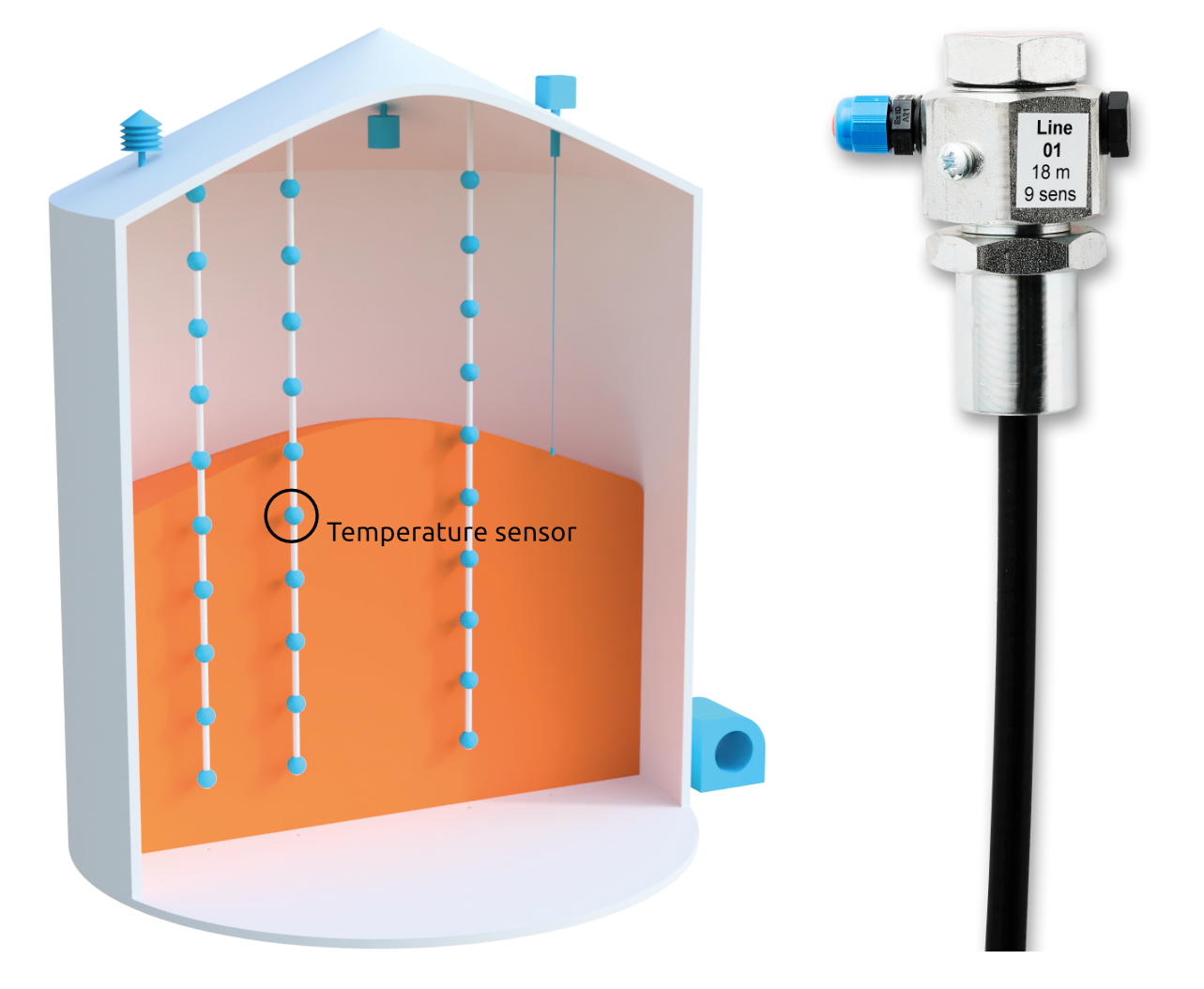


The effectiveness of temperature measurement cables depends not only on cable quality, but also on installation logic.
Key principles include:
Proper spacing between cables
Strategic placement in high-risk zones
Stable anchoring to prevent movement
Installation strategies must be adapted to warehouse type, grain depth, and operational practices.
9. Long-Term Reliability and Maintenance Considerations
Temperature measurement cables are designed for long-term use. Reliability over multiple storage cycles is essential.
Key considerations include:
Resistance to mechanical fatigue
Stability of sensor accuracy over time
Ease of inspection and replacement
Cable-based systems are favored because they minimize the need for frequent intervention while providing continuous data.
10. How This Article Connects to the Knowledge Framework
This article focuses on how temperature measurement cables function as the physical foundation of grain temperature monitoring systems.
It builds upon:
Why temperature matters
🔗 Understanding Grain Temperature
https://www.zstemperaturecable.com/news/understanding-grain-temperature-why-it-is-the-85351495.html
Where monitoring challenges arise
🔗 Warehouse Types and Monitoring Challenges
https://www.zstemperaturecable.com/news/warehouse-types-and-the-challenges-of-grain-te-85353331.html
The system-level perspective
🔗 Core Pillar Article
https://www.zstemperaturecable.com/news/grain-temperature-monitoring-the-cornerstone-85350993.html
Together, these articles form a progressive knowledge structure that guides readers from concept to implementation.
11. Conclusion: Turning Temperature Theory into Reliable Data
Temperature measurement cables are the bridge between grain temperature theory and practical monitoring. By enabling multi-point, continuous, and reliable measurement inside complex grain bulks, they make modern grain storage management possible.
As grain storage systems continue to scale and evolve, cable-based temperature monitoring will remain a foundational technology-supporting safety, efficiency, and long-term grain quality preservation.